Menu

Water Stains on Drywall in Boston – Expert Diagnosis and Permanent Repairs

Stop guessing about those brown water spots on walls. Our team identifies the hidden source behind every moisture discoloration on sheetrock and fixes it right the first time.

Slider Image 1
Slider Image 2
Slider Image 3
Slider Image 4
Slider Image 5
Slider Image 7
Slider Image 8
Slider Image 9
Slider Image 10
Slider Image 11

Why Boston Homes Are Prone to Water Stains on Walls and Ceilings

You wake up and see a yellow stain spreading across your bedroom ceiling. Or you notice brown water spots on walls near the bathroom. Your first question is always the same: where is this coming from?

Boston's brutal freeze-thaw cycles put constant stress on your home's envelope. When temperatures drop below freezing 60-plus nights per year, pipes in uninsulated walls expand and contract. Ice dams form on three-tab asphalt roofs, forcing snowmelt under shingles and into attic spaces. That water travels down through insulation and eventually appears as moisture discoloration on sheetrock in rooms below.

Older triple-deckers in Dorchester and Jamaica Plain face a different problem. Many were built with minimal vapor barriers. Humid summer air condenses inside wall cavities, creating wet patches on plasterboard that homeowners mistake for roof leaks. The stain might be in your living room, but the moisture source could be a failing window flashing on the second floor.

Water marks on ceiling surfaces tell a story. The shape, color, and texture reveal whether you are dealing with an active leak, old damage, or hidden mold growth. A rust-colored ring means the leak has been slow and steady. A dark center with fuzzy edges often signals mold colonization behind the drywall. Fresh wet patches on plasterboard mean the problem is happening right now.

You cannot fix what you cannot see. Most water stains are symptoms, not the actual problem. The real damage is behind the wall.

Why Boston Homes Are Prone to Water Stains on Walls and Ceilings
How We Find and Fix the Real Source of Water Stains

How We Find and Fix the Real Source of Water Stains

We do not patch stains and repaint. That is cosmetic work that guarantees the problem comes back in six months.

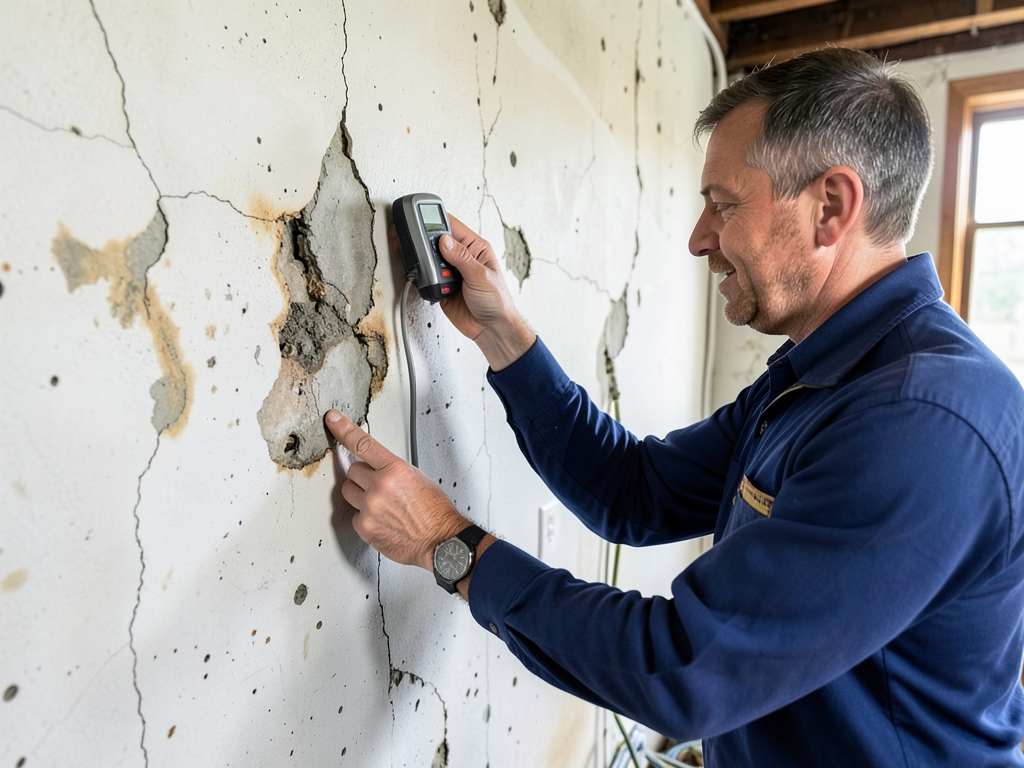
Our approach starts with moisture mapping. We use non-invasive infrared cameras to scan wall cavities and ceiling spaces. These cameras detect temperature differentials that indicate wet building materials. A section of drywall might look dry to the eye, but if it reads 8 degrees cooler than the surrounding area, it is holding moisture.

Next, we use pin-type and pinless moisture meters to quantify exactly how wet the material is. Drywall should read below 1% moisture content. Anything above 16% means active water intrusion. Readings between 1% and 16% suggest a leak that has stopped but left the material damp enough for mold growth.

Once we map the moisture, we trace it to the source. This is not guesswork. We follow the wet materials upward and outward until we find the entry point. Common culprits in Boston homes include corroded supply lines inside walls, failed wax rings under second-floor toilets, cracked cast iron drain stacks, and improperly flashed roof penetrations around chimneys.

We then remove damaged drywall and insulation. Wet fiberglass insulation loses all R-value and must be replaced. If framing lumber reads above 19% moisture content, we dry it with commercial dehumidifiers and air movers until it drops below 15%. This prevents wood rot and ensures new drywall adheres properly.

Only after the source is repaired and all materials are confirmed dry do we rebuild. We use mold-resistant drywall in areas prone to moisture and apply stain-blocking primer before finish paint.

What Happens When You Call About Water Stains

Water Stains on Drywall in Boston – Expert Diagnosis and Permanent Repairs
01

Initial Assessment and Moisture Testing

We arrive with infrared cameras and moisture meters. You show us the visible stains. We scan the surrounding areas to map hidden moisture in walls, ceilings, and floors. This usually takes 30 to 45 minutes. You get a verbal summary of what we found, how severe the moisture intrusion is, and what needs to happen next.
02

Source Identification and Repair

We trace moisture back to the leak source. This often requires removing a small section of drywall for visual confirmation. Once identified, we repair the plumbing failure, seal the roof penetration, or fix the flashing. If the repair requires a licensed plumber or roofer, we coordinate that work and ensure it is completed correctly before moving forward.
03

Drying and Restoration

We extract standing water if present, then set up dehumidifiers and air movers to dry structural materials. This takes 3 to 5 days depending on how saturated the framing is. Once moisture readings confirm everything is dry, we rebuild with mold-resistant materials, apply stain-blocking primer, and finish with paint matched to your existing walls.

Why Boston Homeowners Choose Atlas Water Damage Restoration Providence

Boston's housing stock is old. The median home was built in 1922. That means cast iron plumbing, knob-and-tube wiring in walls, and plaster over wood lath in many neighborhoods. You cannot treat a 1920s Back Bay brownstone the same way you treat a 2005 South End condo conversion.

We understand the construction methods used in different eras across different Boston neighborhoods. Triple-deckers in Roxbury have different framing and plumbing layouts than single-family Colonials in West Roxbury. Knowing this saves time and prevents unnecessary demolition during leak investigations.

Our team also understands how Boston's microclimates affect moisture problems. Homes near the harbor in Charlestown and East Boston deal with salt air that accelerates corrosion in metal plumbing and roofing fasteners. Properties in low-lying areas like parts of Allston experience higher groundwater tables, which can lead to foundation moisture wicking up into first-floor walls.

We work directly with insurance adjusters who cover Boston properties. We document everything with photos, moisture readings, and detailed scope-of-work reports. This speeds up claims and reduces the chance of disputes over what is covered.

You also get a single point of contact throughout the entire process. One project manager coordinates moisture testing, source repair, drying, and reconstruction. You are not handed off between departments or left waiting for callbacks.

We operate out of Providence but serve the greater Boston metro daily. We know the local building inspectors, the permitting process in different municipalities, and how to navigate the quirks of older properties without creating new problems.

What to Expect When You Hire Us for Water Stain Repairs

Response Time and Availability

We answer calls 24/7 because water damage does not wait for business hours. If you call about an active leak, we can have someone on-site within 90 minutes in most Boston neighborhoods. For non-emergency stain investigations, we schedule appointments within 24 hours. Our goal is to stop water intrusion immediately and begin moisture mapping the same day you contact us. Delays allow mold to colonize and structural damage to worsen.

Diagnostic Process and Transparency

We show you the moisture meter readings and infrared images in real time. You see exactly where the moisture is and how far it has spread. Before we cut into any wall or ceiling, we explain what we expect to find and why we need access to that area. If we discover additional damage during demolition, we stop and walk you through it before proceeding. You approve every step that affects scope or budget.

Quality of Finished Repairs

We match existing textures and finishes. If your ceiling has a knockdown texture, we replicate it. If your walls are smooth plaster, we skim-coat the repair to blend seamlessly. Paint is matched using spectrophotometry so you cannot tell where the repair happened. We do not leave patch jobs that stand out or require you to repaint entire rooms. The work should be invisible once complete.

Post-Repair Monitoring and Prevention

We provide a post-repair moisture report with baseline readings for your walls and ceilings. You can use this for future reference if another stain appears. We also give you specific recommendations to prevent recurrence, such as adding insulation to pipe chases, improving attic ventilation, or regrading soil around the foundation. If a stain reappears in the repaired area within 90 days, we come back and reinspect at no charge.

Frequently Asked Questions

You Have Questions,
We Have Answers

How do you get water stains out of drywall? +

Start by identifying and stopping the water source. Let the drywall dry completely, which can take 24-72 hours depending on Boston's humidity levels. Once dry, spray the stain with a bleach solution (1 part bleach to 10 parts water) to kill mold spores. After it dries, apply a stain-blocking primer like Kilz or Zinsser BIN. This seals the discoloration and prevents bleed-through. Finally, repaint the area to match your wall. If the stain is large or the drywall feels soft, you need professional assessment before cosmetic fixes.

Does water stained drywall need to be replaced? +

Not always. If the drywall dried within 48 hours and feels firm, you can often treat the stain and repaint. However, replacement is necessary if the drywall is soft, crumbling, sagging, or shows visible mold growth. Boston homes, especially older triple-deckers, often have limited air circulation. This slows drying and increases mold risk. Press the stained area firmly. If it gives under pressure or shows buckling, cut it out and replace it. Small stains from brief leaks usually do not require replacement if addressed quickly.

How to tell if water is leaking behind drywall? +

Look for discoloration or soft spots on the wall surface. You may notice peeling paint, bubbling texture, or a musty smell near baseboards. In Boston's older brick and frame homes, check for dampness on interior walls during freeze-thaw cycles when ice dams form. Use a moisture meter to measure levels behind the drywall. Readings above 16 percent indicate active moisture. Listen for dripping sounds inside walls. Feel the wall for temperature differences. Cold spots can signal pipe condensation or hidden leaks from aging plumbing common in pre-1950 Boston construction.

Are water stains on walls bad? +

Yes. Water stains signal ongoing or recent moisture intrusion. Even if the leak stopped, the stain shows conditions existed for mold growth. Boston's humid summers accelerate mold colonization behind drywall within 24-48 hours of water exposure. Stains also indicate potential structural damage to studs, insulation, or electrical wiring. Ignoring stains can lead to wood rot, compromised framing, and costly repairs. The stain itself is cosmetic, but the cause is serious. Address the source immediately. Treat every water stain as a symptom of a larger problem requiring professional diagnosis.

Is drywall ruined once it gets wet? +

Not necessarily. Drywall can survive minor water exposure if dried within 24-48 hours. The key is speed and airflow. Use fans and dehumidifiers immediately. However, drywall is gypsum-based and porous. Prolonged saturation causes paper facing to separate, gypsum core to crumble, and mold to grow. In Boston's climate, basement drywall facing groundwater or humidity often stays damp longer. If water soaked the drywall for more than two days, or if it was contaminated water from sewage or flooding, replacement is mandatory. Clean water from a burst pipe has better salvage odds.

Can water stains be removed from walls? +

Surface stains can be removed, but the process requires more than wiping. First, ensure the area is completely dry and the leak is fixed. Clean the stain with a mild detergent solution. For stubborn discoloration, apply a stain-blocking primer like Kilz or BIN shellac-based primer. These products seal tannins and prevent the stain from bleeding through new paint. Then repaint. However, if the stain returns after priming, moisture is still present behind the drywall. This requires cutting open the wall to address hidden water damage or mold colonization common in Boston's older housing stock.

Can you paint over water stains in drywall? +

Never paint directly over water stains. The discoloration will bleed through latex or oil-based paint within days. You must first apply a stain-blocking primer designed to seal water stains and prevent tannin bleed-through. Products like Zinsser BIN (shellac-based) or Kilz Original (oil-based) work best. Apply one to two coats, let it dry completely, then paint. If you skip the primer, the stain reappears, wasting time and money. In Boston's humid conditions, ensure the drywall is bone-dry before priming. Moisture trapped under paint leads to peeling and mold growth.

Will homeowners insurance cover water damage to a ceiling? +

It depends on the cause. Homeowners insurance typically covers sudden and accidental water damage, like burst pipes or appliance failures. However, policies exclude damage from long-term neglect, lack of maintenance, or gradual leaks. In Boston, ceiling damage from ice dams may be covered if you maintain your roof and gutters. Flood damage requires separate flood insurance. Document the damage immediately with photos. Contact your insurer within 24 hours. Review your policy's water damage exclusions. A restoration professional can help document the scope and communicate with your adjuster to maximize your claim.

How to tell if drywall is water damaged? +

Check for discoloration, usually yellow, brown, or rust-colored stains. Press the drywall firmly. Water-damaged areas feel soft, spongy, or give under pressure. Look for bubbling paint, peeling texture, or warping. Smell the wall. A musty odor indicates mold growth behind the surface. In Boston homes, check corners and exterior walls after Nor'easters or heavy snowmelt. Use a moisture meter for confirmation. Readings above 16 percent mean active moisture. Visible mold, sagging ceilings, or crumbling edges are advanced signs. Early detection prevents structural damage and health risks from prolonged exposure.

Does homeowners insurance cover water leaks in walls? +

Coverage depends on the leak's cause and your policy terms. Sudden pipe bursts or supply line failures are usually covered. Gradual leaks from poor maintenance, aging pipes, or slow drips are typically excluded. In Boston, where many homes have older plumbing, insurers scrutinize claims closely. If a corroded pipe finally fails, you may face denial if you knew about the issue. Foundation cracks allowing groundwater intrusion are rarely covered. Read your policy's water damage section carefully. File claims promptly. Document everything. A public adjuster can help fight denials on legitimate sudden-damage claims.

How Boston's Nor'easters Create Hidden Water Damage Behind Drywall

Boston gets hit with 2 to 4 major nor'easters every winter. These storms bring heavy snow followed by rapid temperature swings. Snow piles up on roofs, then melts during brief warm spells, then refreezes at night. This cycle creates ice dams along roof eaves, which force water under shingles and into attic spaces. The water migrates through insulation and appears weeks later as yellow stains on drywall in bedrooms and hallways. Homeowners often assume the roof is failing, but the real issue is inadequate attic insulation and ventilation allowing heat loss that melts snow unevenly.

Boston's housing density also complicates leak investigations. In neighborhoods like South Boston and Charlestown, row houses and triple-deckers share common walls and intertwined plumbing systems. A leak in one unit can travel through shared framing and appear as moisture discoloration on sheetrock in an adjacent unit. We have traced water stains in ground-floor units back to failed shower pans two floors above in separate apartments. Local expertise matters because you need someone who understands how these older multi-family structures are actually built and where the hidden connections are.

Water Damage Restoration Services in The Boston Area

You can see our service area and our location on the map below. We are proud to serve the entire Boston area and surrounding communities. We're always ready to dispatch our team to your home or business, no matter where you are. We’re committed to a fast, reliable response and ensuring we’re always there when you need us most.

Address:
First Choice Water Damage Restoration Boston, 44 School St., Boston, MA, 02108

Additional Services We Offer

Our news updates

Latest Articles & News from The Blogs

Why Your Milton Chimney is Actually the Source of That Living Room Water Stain That brown water stain on your…

Why Your Milton Chimney is Actually the Source of That Living Room Water Stain

Why Your Milton Chimney is Actually the Source of That Living Room Water Stain That brown water stain on your…

How to Safely Move and Store Your Furniture After a Major Flood in West Roxbury

How to Safely Move and Store Your Furniture After a Major Flood in West Roxbury West Roxbury homes often feature…

Understanding Your Rights as a Boston Tenant When Mold Becomes an Issue

As a Boston tenant facing mold growth in your apartment you need to know your legal rights under Massachusetts law…

Contact Us

Water stains always get worse. Call Atlas Water Damage Restoration Providence at (617) 789-8099 for same-day moisture testing and leak source identification. We serve all Boston neighborhoods and work directly with your insurance company to expedite claims.