
Using Smart Landscaping to Keep Surface Water Away from Your Concord Foundation
Your Concord home sits on land shaped by ancient glaciers and fed by seasonal rains. Every year, snowmelt from the Middlesex County watershed and spring downpours test the drainage systems around your foundation. When water pools near your basement walls, hydrostatic pressure builds and forces moisture through even the smallest cracks. The result is not just a wet basement but potential structural damage, mold growth, and costly restoration work. Smart landscaping redirects surface water before it becomes a problem.
Effective drainage starts with understanding your property’s natural flow. In Concord, glacial till and pockets of clay create slow-draining soils that hold water near the surface. Combined with the area’s 45-inch average annual rainfall, this creates conditions where water can linger for days after a storm. By reshaping the land and installing the right drainage systems, you can move water away from your foundation and protect your home for decades.
Common Drainage Challenges in Concord Properties
Concord’s unique geography creates specific drainage problems that homeowners must address. The town sits in a transition zone between the coastal plain and the upland hills, which means soil conditions vary significantly even within a single property. Glacial deposits left behind by the last ice age created a mix of sand, silt, and clay that affects how water moves through your yard.
Seasonal patterns in Middlesex County intensify these challenges. Spring brings rapid snowmelt that saturates the ground before the soil can thaw completely. Summer thunderstorms dump heavy rain in short bursts, overwhelming natural drainage. Fall leaves clog gutters and downspouts, directing water where it shouldn’t go. Winter freeze-thaw cycles create ice dams that redirect melting snow toward your foundation.
Local building patterns also contribute to drainage issues. Many Concord homes were built before modern drainage requirements existed. Historic properties in areas like West Concord and Nine Acre Corner often lack proper grading or gutter systems. Even newer homes can face problems if builders didn’t account for the specific soil conditions on each lot.
Essential Drainage Systems for Foundation Protection
Several proven systems can keep water away from your Concord foundation. Each works best in specific conditions, and many properties benefit from combining multiple approaches. The key is matching the solution to your soil type, slope, and local rainfall patterns.
French Drains
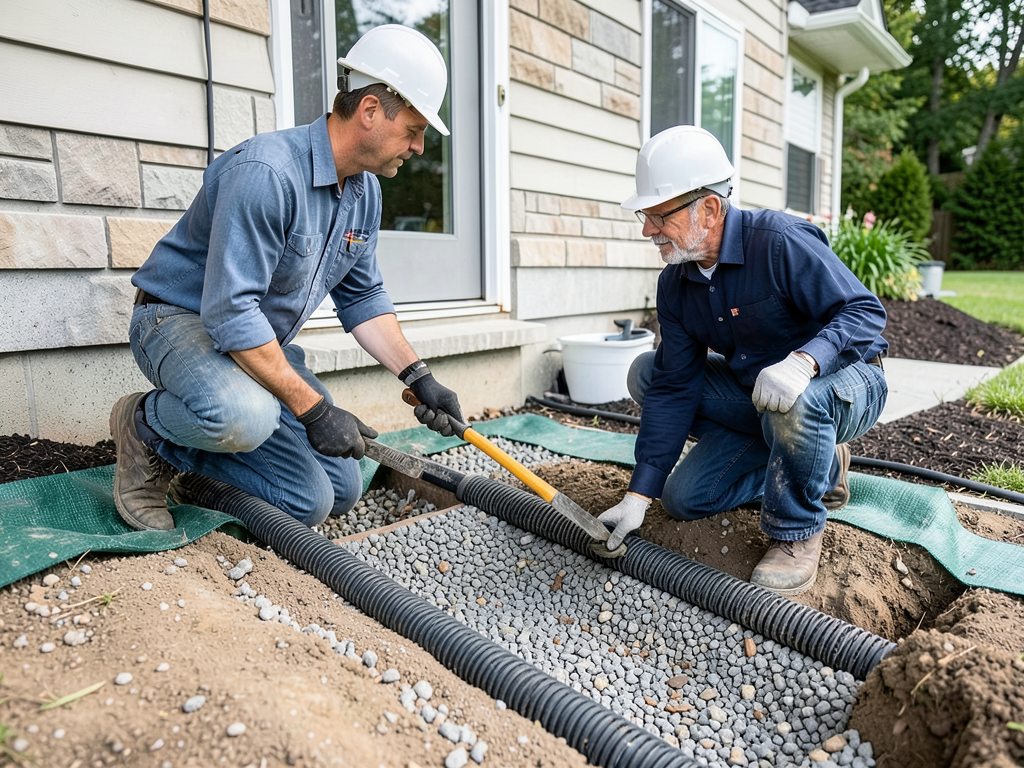
French drains collect subsurface water and channel it away from problem areas. A perforated pipe sits in a gravel-filled trench, allowing water to enter from all sides. The pipe slopes gently downhill, using gravity to move water to a safe discharge point. In Concord’s clay-heavy soils, French drains prevent water from saturating the ground around your foundation.
Installation requires careful planning. The trench must slope at least 1% (one foot drop per 100 feet of length) to ensure proper flow. Filter fabric prevents soil from clogging the gravel, while the pipe’s perforations allow water entry even when the surrounding soil is saturated. For properties near wetlands or the Concord River, discharge points must comply with local conservation regulations.
Catch Basins and Dry Wells
Catch basins collect surface water from low spots in your yard. A grated inlet sits flush with the ground, allowing water to flow in while keeping debris out. Below ground, a solid pipe carries water to a dry well or other discharge point. This system works well for managing runoff from driveways, patios, and lawn areas. Managing industrial water damage and flood cleanup in Chelsea.
Dry wells act as underground holding tanks that slowly release water into the surrounding soil. A large perforated chamber or gravel-filled pit allows water to disperse gradually, preventing the ground from becoming saturated. In areas with high water tables, dry wells must be sized carefully to handle the expected volume without overflowing. How to handle a sudden sewage backup in your Somerville home.
Gutter Downspout Extensions
Water pouring from your roof can deposit thousands of gallons near your foundation during a single storm. Standard downspouts often discharge water within a few feet of the house, where it can seep directly into the soil against your basement walls. Extensions move this water farther away, giving it time to disperse before reaching your foundation.
Several extension options exist. Flexible plastic tubes can carry water up to 25 feet away. Buried drain pipes provide a permanent solution that doesn’t interfere with landscaping. Pop-up emitters discharge water at the surface when it’s safe to do so, then close to prevent debris entry. The right choice depends on your property’s layout and local regulations.
Foundation Grading
Proper grading ensures water flows away from your home rather than toward it. The ground should slope away from your foundation at a rate of at least 6 inches drop over the first 10 feet. This creates a gentle but effective slope that moves surface water away before it can pool near your walls.
Many older Concord homes were built before grading standards existed. Over time, soil settlement can create negative slopes that direct water toward the foundation. Correcting these problems often requires adding soil around the foundation and reshaping the landscape. The new grade must remain below any wood siding or other materials to prevent moisture damage.
Sump Pump Discharge Solutions
If your home has a sump pump, the discharge line must move water far enough away to prevent it from cycling back into your basement. A typical sump pump can move 30 to 50 gallons per minute during heavy rains, creating a concentrated flow that can quickly saturate the soil near your foundation.
Discharge lines should extend at least 10 to 20 feet from your foundation, with the outlet positioned to allow water to flow away from your home. Burying the line protects it from freezing and keeps your yard looking neat. In areas with strict discharge regulations, you may need to direct sump pump water to a dry well or other approved collection system.
Understanding Concord’s Soil and Water Table Conditions
Concord’s soil composition directly affects drainage system performance. The town sits on a complex mix of glacial till, marine clay, and alluvial deposits from the Concord River. These materials have different drainage characteristics that influence where water goes after it hits the ground.
Glacial till, common throughout Middlesex County, consists of unsorted sediment deposited by melting glaciers. This material contains everything from clay particles to boulders, creating an irregular soil structure that can be difficult to predict. Some areas drain well, while others hold water like a sponge. Marine clay, found in lower-lying areas, expands when wet and shrinks when dry, creating additional challenges for drainage systems.
The water table in Concord varies seasonally and by location. Areas near the Concord River or wetlands typically have higher water tables that rise during wet seasons. Properties in these zones may experience groundwater seeping through basement floors even with perfect surface drainage. Understanding your specific site conditions requires soil testing and sometimes professional assessment. Professional sump pump failure cleanup for Newton homeowners.
Local regulations also affect drainage decisions. The Concord Conservation Commission oversees work near wetlands, vernal pools, and other protected areas. Any drainage system that could affect these resources requires approval before installation. The Massachusetts Wetlands Protection Act provides additional oversight for work that could impact water resources. Massachusetts Wetlands Protection Act.
Professional Installation vs. DIY Approaches
Many homeowners attempt DIY drainage projects to save money, but professional installation offers significant advantages. Experienced contractors understand local soil conditions, building codes, and drainage principles that ensure long-term success. They also have equipment to handle the heavy digging and grading work that DIY projects often underestimate.
Professional installers start with a comprehensive site assessment. They evaluate soil composition, slope, existing drainage patterns, and potential discharge locations. This analysis identifies the best solutions for your specific property rather than applying generic fixes that may not work in your conditions.
Quality installation makes the difference between a system that works for decades and one that fails within months. Proper pipe bedding, correct slope calculations, and appropriate materials selection all affect long-term performance. Professionals also understand how to navigate local permitting requirements and ensure compliance with all applicable regulations.
Cost considerations often influence the decision between DIY and professional work. While DIY projects may seem less expensive initially, failures can lead to expensive water damage repairs. Professional systems typically include warranties and are designed to handle the specific challenges of your property, providing better long-term value.
The Connection Between Drainage and Water Damage Restoration
Landscape drainage represents a critical line of defense against water damage, but even the best systems can fail during extreme weather events. When drainage systems are overwhelmed or fail, water can enter your home through basement walls, floors, or windows. Understanding this connection helps homeowners appreciate both the preventative and restorative aspects of water management.
Water damage restoration professionals see the consequences of poor drainage every day. They encounter homes where surface water saturated the soil around foundations, creating hydrostatic pressure that forced water through basement walls. They see properties where clogged gutters directed thousands of gallons of water to the wrong locations. They also see homes where proper drainage systems prevented damage during storms that flooded neighboring properties. The most reliable flood restoration companies serving South Boston right now.
The restoration process often reveals drainage problems that homeowners didn’t know existed. During water damage cleanup, professionals assess how water entered the structure and identify the underlying causes. This assessment frequently leads to recommendations for drainage improvements that prevent future incidents. The goal extends beyond cleaning up the current mess to ensuring the problem doesn’t repeat.
Insurance considerations also connect drainage and restoration. Many water damage claims result from preventable drainage failures. Insurance companies may deny claims if they determine that poor maintenance or inadequate drainage contributed to the damage. Proactive drainage improvements can prevent both the damage and the claim denial, protecting your home and your finances.
Maintenance Requirements for Drainage Systems
Even the best-installed drainage systems require regular maintenance to function properly. Neglecting maintenance can lead to system failures that cause the exact problems you tried to prevent. Understanding maintenance requirements helps ensure your investment continues protecting your home for years to come.
French drains need periodic inspection to ensure they remain free of sediment and roots. Over time, soil particles can enter the gravel bed, reducing its permeability. Tree roots may grow into the pipe through perforations, blocking water flow. Annual inspections can identify these problems before they cause system failure.
Catch basins require regular cleaning to remove leaves, sediment, and other debris that can clog the inlet or outlet. During fall months, leaves can quickly fill a catch basin, preventing it from collecting water effectively. Quarterly cleaning may be necessary in areas with heavy tree cover or during seasons with high debris accumulation.
Gutter systems need cleaning at least twice yearly, with additional cleaning after major storms or during fall leaf drop. Clogged gutters overflow, directing water to areas where it can cause damage. Downspout extensions should be checked for proper connection and flow direction, ensuring they continue moving water away from your foundation.
Grading changes over time due to soil settlement, erosion, and landscaping modifications. Annual inspections should check that the ground still slopes away from your foundation at the required rate. Adding soil to maintain proper grading prevents water from pooling near your basement walls.
Cost-Benefit Analysis of Drainage Improvements
Investing in proper drainage represents a significant expense, but the costs of water damage far exceed preventative measures. Understanding the financial implications helps homeowners make informed decisions about protecting their properties.
Professional drainage system installation typically costs between $3,000 and $15,000, depending on the scope and complexity of the work. French drains for an average-sized home might cost $5,000 to $8,000. Complete grading and drainage improvements for larger properties can exceed $20,000. These costs vary based on soil conditions, property size, and local labor rates.
Water damage restoration costs vary dramatically based on the extent of damage. A flooded basement requiring professional cleanup might cost $3,000 to $10,000 for water removal, drying, and initial repairs. Structural damage from prolonged moisture exposure can add $10,000 to $50,000 or more in repair costs. Mold remediation, often necessary after water damage, typically costs $2,000 to $6,000 for an average home.
Insurance deductibles and potential premium increases add to the financial impact of water damage. Most homeowners policies have deductibles of $1,000 to $2,500, meaning you pay this amount before insurance coverage begins. Multiple claims can lead to premium increases of 20% to 50% or more, creating long-term financial consequences beyond the initial repair costs.
When viewed over a 10 to 20-year timeframe, preventative drainage improvements often pay for themselves by avoiding a single major water damage incident. The peace of mind and protection of your home’s value provide additional benefits that are difficult to quantify but significant for most homeowners.
Choosing the Right Contractor for Drainage Work
Not all contractors have the expertise needed for effective drainage work. Landscape companies may excel at aesthetics but lack understanding of water movement and foundation protection. General contractors might not appreciate the specific challenges of Concord’s soil and climate conditions. Choosing the right professional ensures your drainage system performs as intended.
Look for contractors with specific experience in drainage and foundation protection. Ask about their experience with projects similar to yours in size, soil conditions, and complexity. Request references from local homeowners and follow up to learn about their satisfaction with the work performed.
Verify licensing and insurance coverage. In Massachusetts, contractors must hold proper licenses for the work they perform. Insurance should include both liability coverage and workers’ compensation to protect you from potential claims if workers are injured on your property.
Ask about warranties and guarantees. Quality contractors stand behind their work with written warranties covering both materials and workmanship. Understand what’s covered, for how long, and what actions might void the warranty. A contractor unwilling to provide written guarantees may not be confident in their work quality.
Request detailed proposals that explain the scope of work, materials to be used, and project timeline. Professional proposals should address your specific property conditions rather than offering one-size-fits-all solutions. The proposal should also explain how the work complies with local regulations and building codes.
Seasonal Considerations for Drainage Systems
Concord’s four distinct seasons create varying demands on drainage systems throughout the year. Understanding these seasonal patterns helps homeowners prepare their systems for changing conditions and identify potential problems before they cause damage.
Spring brings the most challenging conditions for drainage systems. Rapid snowmelt saturates the ground while the soil remains frozen below the surface, preventing proper absorption. Spring rains add to the moisture load, often overwhelming systems designed for normal conditions. This is when many drainage failures first become apparent.
Summer thunderstorms test drainage capacity with intense rainfall over short periods. Systems must handle sudden influxes of water while dealing with potential clogging from summer debris. This is also when you’ll notice if your grading needs adjustment, as dry conditions make drainage patterns more visible.
Fall requires preparation for winter conditions. Cleaning gutters and downspouts becomes critical as leaves begin falling. Catch basins need inspection to ensure they’re free of summer debris. This is also the time to check that all drainage components are clear and ready for winter’s challenges.
Winter creates unique drainage challenges in Concord. Frozen ground prevents proper water absorption, while ice can block drainage paths. Snowmelt can overwhelm systems if they’re not properly designed for winter conditions. Underground pipes must be installed below the frost line to prevent freezing and cracking.
Environmental Considerations and Sustainable Practices
Modern drainage solutions increasingly incorporate environmental considerations and sustainable practices. These approaches not only protect your home but also benefit the broader ecosystem and can reduce long-term maintenance requirements.
Permeable paving materials allow water to pass through surfaces rather than running off into storm drains. Driveways, walkways, and patios made from permeable pavers or porous concrete reduce runoff while maintaining functionality. These materials work particularly well in areas where traditional drainage would be difficult to install.
Rain gardens provide attractive solutions for managing runoff while creating habitat for beneficial insects and birds. These shallow depressions planted with water-tolerant species collect and filter runoff from roofs, driveways, and other impervious surfaces. The plants help absorb water while the soil structure filters pollutants before water enters the groundwater system.
Rain barrels and cisterns capture roof runoff for later use in irrigation. While not suitable for drinking without treatment, this water can support landscaping during dry periods, reducing demand on municipal water supplies. These systems also reduce the volume of water that must be managed by your drainage infrastructure.
Native plantings in drainage areas provide multiple benefits. Deep-rooted native plants improve soil structure and water infiltration while requiring less maintenance than non-native species. These plants also support local wildlife and resist local pests and diseases, reducing the need for chemical treatments.
Emergency Response and System Failures
Even well-designed drainage systems can fail during extreme weather events. Understanding what to do when problems occur helps minimize damage and protect your property until permanent repairs can be made.
During heavy rainfall, monitor your drainage systems for signs of failure. Water pooling near your foundation, overflowing catch basins, or water backing up through floor drains indicate problems requiring immediate attention. Quick response can prevent water from entering your home. Getting immediate help for a burst pipe in your Back Bay brownstone.
If water enters your basement despite your drainage systems, prioritize safety first. Turn off electricity to affected areas if water reaches outlets or electrical panels. Avoid contact with floodwater, which may contain contaminants or pose electrical shock hazards. Document damage with photos for insurance purposes.
Emergency pumping may be necessary to remove standing water. Wet/dry vacuums work for small amounts, while larger volumes require submersible pumps. Professional water removal services have industrial equipment that can extract water quickly and begin the drying process to prevent mold growth.
After emergency response, assess what caused the system failure. Was it overwhelmed by rainfall volume, clogged by debris, or did a component fail? Understanding the cause helps prevent future incidents and may reveal needed improvements to your drainage infrastructure.
Future-Proofing Your Drainage System
Climate change and increasing storm intensity create new challenges for drainage systems designed under historical rainfall patterns. Future-proofing your drainage infrastructure helps ensure it continues protecting your home as weather patterns evolve.
Design for capacity beyond current needs. Historical rainfall data shows increasing storm intensity in Massachusetts, with more frequent heavy rainfall events. Building in extra capacity helps your system handle these changing conditions without failure. This might mean larger pipes, additional catch basins, or more extensive grading than minimum requirements suggest.
Consider smart technology integration. Modern drainage systems can include sensors that detect water levels and alert you to potential problems before they cause damage. Automated valves can redirect water flow based on conditions, while monitoring systems track system performance over time.
Plan for maintenance access. Even the best systems require occasional maintenance or repair. Design your drainage infrastructure with access points that make inspection and cleaning easy. This might include cleanout ports in underground pipes, removable grates on catch basins, or clear access to key components.
Document your system thoroughly. Create maps showing the location of all drainage components, including underground pipes and connections. Note the capacity of each component and any special features. This documentation helps future homeowners understand the system and assists contractors in providing proper maintenance.
Frequently Asked Questions
How do I know if my property has drainage problems?
Common signs include water pooling near your foundation after rain, damp spots on basement walls, musty odors in your basement, or visible erosion around your home’s perimeter. You might also notice that your basement stays humid even with dehumidifiers running, or that you have recurring mold problems in lower levels.
Can I install drainage systems myself?
Simple projects like extending downspouts or adding surface grading might be DIY-friendly, but comprehensive drainage systems typically require professional expertise. Proper slope calculations, soil analysis, and understanding of local regulations all affect system performance. DIY mistakes can lead to costly water damage that exceeds any savings from self-installation.
How much does professional drainage installation cost?
Costs vary widely based on property size, soil conditions, and system complexity. Simple downspout extensions might cost a few hundred dollars, while comprehensive French drain systems typically range from $5,000 to $15,000. Properties with challenging conditions like high water tables or extensive grading needs may cost more.
Will drainage improvements increase my property value?
Yes, effective drainage systems protect your home’s foundation and prevent water damage, which are significant value factors for potential buyers. Buyers often pay premiums for homes with documented drainage improvements, especially in areas prone to water issues. The improvements also make your property more attractive by eliminating wet, unusable yard areas.
How long do drainage systems typically last?
Quality drainage systems can last 20 to 50 years with proper maintenance. French drains may need partial replacement after 15 to 20 years if they become clogged with sediment. Surface components like catch basins and downspout extensions typically last 15 to 25 years. Regular maintenance significantly extends system lifespan.
Take Action to Protect Your Concord Home
Surface water management around your foundation isn’t just about keeping your basement dry—it’s about protecting your home’s structural integrity and your family’s health. The glacial soils and seasonal weather patterns in Concord create unique challenges that require thoughtful, professional solutions. Whether you’re dealing with existing water problems or want to prevent future issues, the right drainage system makes all the difference.
Don’t wait for the next storm to reveal your property’s drainage weaknesses. A comprehensive assessment can identify problems before they cause damage, saving you thousands in potential restoration costs. Professional drainage contractors understand Concord’s specific conditions and can design systems that work with your property’s natural features while complying with all local regulations.
Water damage restoration is far more expensive than preventative drainage improvements. The cost of cleaning up a flooded basement, repairing structural damage, and addressing mold problems can easily exceed $20,000 to $50,000. Compare that to the $5,000 to $15,000 investment in proper drainage systems, and the choice becomes clear.
Your home represents your largest investment. Protecting it from water damage through smart landscaping and proper drainage isn’t just practical—it’s essential for maintaining your property’s value and your family’s comfort. Contact a qualified drainage professional today to assess your property and recommend solutions tailored to your specific needs.
Call (617) 789-8099 today to schedule your drainage assessment. Our team understands Concord’s unique soil conditions and building patterns, and we can design a system that keeps your foundation dry through every season. Don’t let another storm put your home at risk—take action now to protect your investment.
Pick up the phone and call (617) 789-8099 before the next heavy rain hits. We’ll evaluate your property’s drainage needs and provide clear recommendations for keeping water away from your foundation. Your home deserves professional protection, and we’re here to provide it. For more information, visit EPA’s Soak Up the Rain.
{
“@context”: “https://schema.org”,
“@type”: “BlogPosting”,
“headline”: “Using Smart Landscaping to Keep Surface Water Away from Your Concord Foundation”,
“description”: “Prevent basement flooding with smart landscaping in Concord MA. Learn about French drains, grading, and local soil conditions to protect your foundation from water damage.”,
“wordCount”: 3855,
“datePublished”: “2026-06-12T12:01:00.000Z”,
“dateModified”: “2026-06-12T12:01:00.000Z”,
“inLanguage”: “en-US”,
“mainEntityOfPage”: {
“@type”: “WebPage”,
“@id”: “https://firstchoicewaterdamagerestorationboston.com”
},
“publisher”: {
“@type”: “LocalBusiness”,
“name”: “First Choice Water Damage Restoration Boston”,
“url”: “https://firstchoicewaterdamagerestorationboston.com”
},
“author”: {
“@type”: “Organization”,
“name”: “First Choice Water Damage Restoration Boston”,
“url”: “https://firstchoicewaterdamagerestorationboston.com”
},
“image”: {
“@type”: “ImageObject”,
“url”: “https://firstchoicewaterdamagerestorationboston.com/wp-content/uploads/2026/03/using-smart-landscaping-to-keep-surface-water-away-1.png”
}
}
{
“@context”: “https://schema.org”,
“@type”: “LocalBusiness”,
“name”: “First Choice Water Damage Restoration Boston”,
“url”: “https://firstchoicewaterdamagerestorationboston.com”,
“address”: {
“@type”: “PostalAddress”,
“addressLocality”: “Boston”
},
“areaServed”: {
“@type”: “City”,
“name”: “Boston”
}
}
{
“@context”: “https://schema.org”,
“@type”: “FAQPage”,
“mainEntity”: [
{
“@type”: “Question”,
“name”: “How do I know if my property has drainage problems?”,
“acceptedAnswer”: {
“@type”: “Answer”,
“text”: “Common signs include water pooling near your foundation after rain, damp spots on basement walls, musty odors in your basement, or visible erosion around your home’s perimeter. You might also notice that your basement stays humid even with dehumidifiers running, or that you have recurring mold problems in lower levels.”
}
},
{
“@type”: “Question”,
“name”: “Can I install drainage systems myself?”,
“acceptedAnswer”: {
“@type”: “Answer”,
“text”: “Simple projects like extending downspouts or adding surface grading might be DIY-friendly, but comprehensive drainage systems typically require professional expertise. Proper slope calculations, soil analysis, and understanding of local regulations all affect system performance. DIY mistakes can lead to costly water damage that exceeds any savings from self-installation.”
}
},
{
“@type”: “Question”,
“name”: “How much does professional drainage installation cost?”,
“acceptedAnswer”: {
“@type”: “Answer”,
“text”: “Costs vary widely based on property size, soil conditions, and system complexity. Simple downspout extensions might cost a few hundred dollars, while comprehensive French drain systems typically range from $5,000 to $15,000. Properties with challenging conditions like high water tables or extensive grading needs may cost more.”
}
},
{
“@type”: “Question”,
“name”: “How long do drainage systems typically last?”,
“acceptedAnswer”: {
“@type”: “Answer”,
“text”: “Quality drainage systems can last 20 to 50 years with proper maintenance. French drains may need partial replacement after 15 to 20 years if they become clogged with sediment. Surface components like catch basins and downspout extensions typically last 15 to 25 years. Regular maintenance significantly extends system lifespan.”
}
}
]
}
{
“@context”: “https://schema.org”,
“@type”: “BreadcrumbList”,
“itemListElement”: [
{
“@type”: “ListItem”,
“position”: 1,
“name”: “Home”,
“item”: “https://firstchoicewaterdamagerestorationboston.com”
},
{
“@type”: “ListItem”,
“position”: 2,
“name”: “Blog”,
“item”: “https://firstchoicewaterdamagerestorationboston.com/blog”
},
{
“@type”: “ListItem”,
“position”: 3,
“name”: “Using Smart Landscaping to Keep Surface Water Away from Your Concord Foundation”
}
]
}
{
“@context”: “https://schema.org”,
“@type”: “Service”,
“serviceType”: “Water Damage Restoration”,
“provider”: {
“@type”: “LocalBusiness”,
“name”: “First Choice Water Damage Restoration Boston”,
“url”: “https://firstchoicewaterdamagerestorationboston.com”
},
“areaServed”: {
“@type”: “City”,
“name”: “Boston”
},
“description”: “Prevent basement flooding with smart landscaping in Concord MA. Learn about French drains, grading, and local soil conditions to protect your foundation from water damage.”
}