Menu

Hidden Moisture Detection in Boston – Expert Diagnosis Before Structural Damage Spreads

Advanced thermal imaging and moisture mapping technology identifies trapped water and concealed dampness in Boston's aging triple-deckers and brick rowhouses before mold growth and wood rot compromise your property.

Slider Image 1
Slider Image 2
Slider Image 3
Slider Image 4
Slider Image 5
Slider Image 7
Slider Image 8
Slider Image 9
Slider Image 10
Slider Image 11

Why Hidden Water Damage Is a Silent Crisis in Boston Properties

You notice a musty smell in your South End brownstone. The hardwood feels slightly spongy near the bathroom. Your energy bills climbed 20 percent last winter, but you cannot find the source.

This is hidden moisture. It lives behind plaster walls, under century-old floorboards, and inside the balloon-frame cavities common to Boston's older housing stock. You cannot see it, but it is destroying your property from the inside out.

Boston's climate makes this worse. We experience freeze-thaw cycles from November through March. Snow melt seeps into mortar joints and foundation cracks. Spring humidity hovers above 70 percent, creating perfect conditions for trapped water to stagnate. Summer thunderstorms dump inches of rain in minutes, overwhelming gutters and saturating crawl spaces.

The architecture does not help. Many Boston homes were built between 1880 and 1920, before modern vapor barriers and waterproofing membranes. Triple-deckers have flat roofs with hidden drainage issues. Brick facades absorb moisture during rainstorms, then wick it inward through capillary action. Basements sit below the water table in low-lying neighborhoods like Charlestown and East Boston.

By the time you see stains or peeling paint, the damage is advanced. Detecting invisible leaks early prevents expensive repairs. Finding trapped water before it rots floor joists saves structural integrity. Locating concealed dampness stops mold colonies before they compromise indoor air quality.

You need technology that sees through walls. You need someone who understands how water moves through Boston's unique building types.

Why Hidden Water Damage Is a Silent Crisis in Boston Properties
How We Identify Unseen Water Intrusion Using Professional-Grade Equipment

How We Identify Unseen Water Intrusion Using Professional-Grade Equipment

We do not guess. We measure.

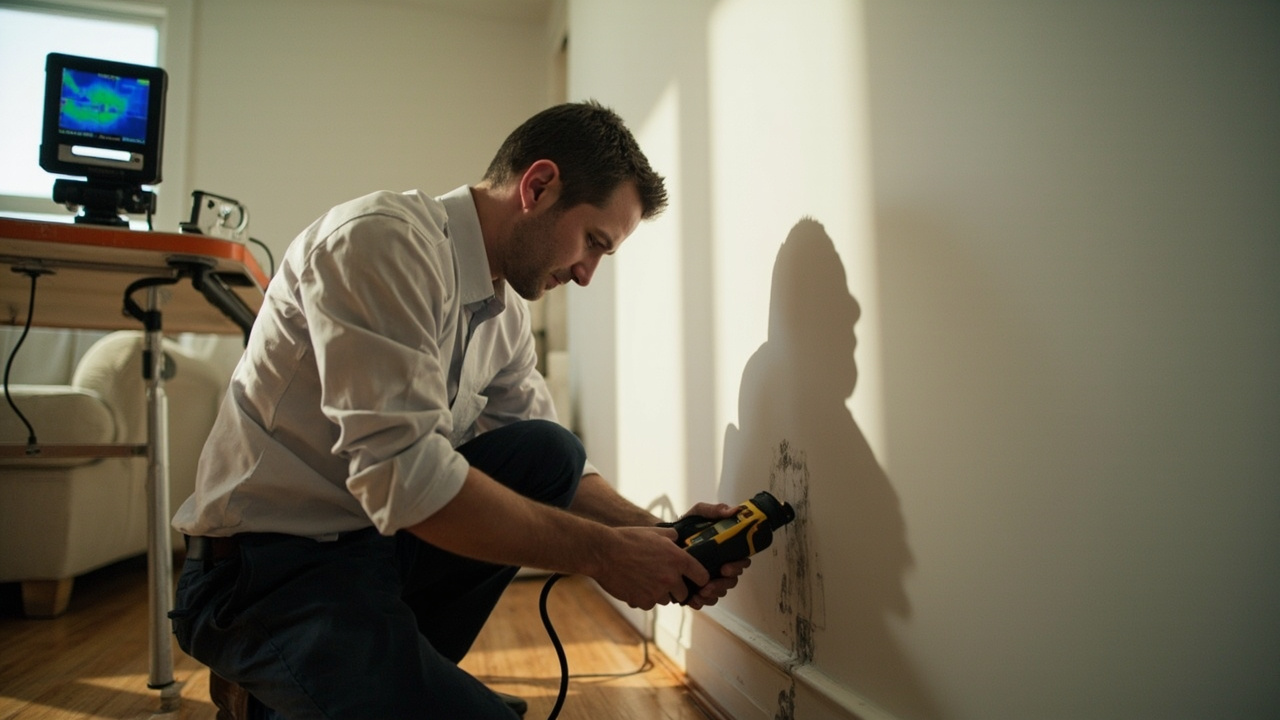
Our technicians use thermal imaging cameras that detect temperature differentials as small as 0.1 degrees Fahrenheit. Wet building materials show up as cold spots on the thermal scan because evaporating water cools surfaces. This lets us map exactly where moisture is hiding inside walls, ceilings, and subfloors without demolition.

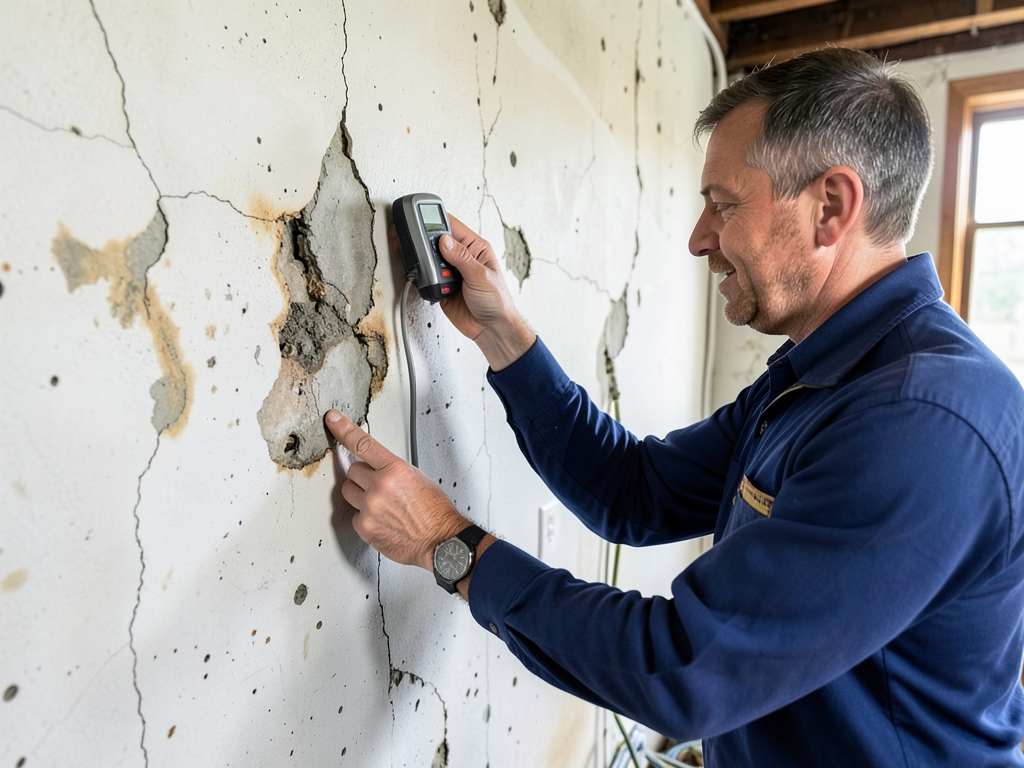
We follow up with pin-type and non-invasive moisture meters. Pin meters penetrate drywall and wood to measure electrical resistance. Higher moisture content increases conductivity, giving us precise readings at different depths. Non-invasive meters use radio frequency signals to scan up to three-quarters of an inch deep without leaving holes. This is critical for finished surfaces and historic plaster you cannot afford to damage.

We use hygrometers to measure relative humidity and calculate the dew point. If your basement air is 68 degrees with 75 percent relative humidity, the dew point is 59 degrees. Any surface colder than that will collect condensation. We identify these condensation zones before water damage starts.

For complex cases, we deploy infrared thermography during blower door tests. We depressurize your home to exaggerate air leaks, then use thermal imaging to spot hidden water intrusion points. This is how we find failed flashing around chimneys, gaps in brick pointing, and compromised window casings.

Atlas Water Damage Restoration Providence brings this technology to every inspection. We document findings with annotated photos and moisture maps. You get a written report showing exact moisture levels, affected areas, and the probable source. No speculation. Just data.

What Happens During a Professional Moisture Detection Assessment

Hidden Moisture Detection in Boston – Expert Diagnosis Before Structural Damage Spreads
01

Initial Visual Inspection

We walk your property with you, examining areas where you noticed problems. We check common failure points like bathroom walls, kitchen cabinets, basement perimeters, and attic penetrations. We look for subtle clues: efflorescence on brick, buckled laminate flooring, rust stains under sinks, and discolored grout. This gives us a baseline before we deploy diagnostic equipment.
02

Thermal and Moisture Scanning

We systematically scan suspect areas with thermal cameras and moisture meters. We document readings in a grid pattern, creating a moisture map that shows severity and spread. We trace moisture to its source by following the wettest readings upstream. In multi-story homes, we check floors above and below to identify vertical migration through plumbing chases and wall cavities.
03

Source Identification and Reporting

We pinpoint the origin: a leaking supply line, failed shower pan, roof penetration, or foundation seepage. We explain what caused the moisture intrusion, how long water has been present, and what building materials are affected. You receive a detailed report with thermal images, moisture readings, and a remediation plan prioritized by urgency and structural risk.

Why Boston Property Owners Trust Local Moisture Detection Experts

Generic water damage companies treat every building the same. That fails in Boston.

You need someone who understands how brick veneer construction behaves differently than wood-frame triple-deckers. Someone who knows that Back Bay brownstones have rubble-stone foundations that wick groundwater. Someone familiar with the shallow frost line at 36 inches and how inadequate exterior drainage causes hydrostatic pressure against basement walls.

Atlas Water Damage Restoration Providence works exclusively in the Boston metro. We have scanned hundreds of properties from Beacon Hill to Dorchester. We know where water hides in your type of building.

We understand local construction methods. Many Boston homes have horsehair plaster on wood lath. This material absorbs water differently than modern drywall and requires different drying protocols. We know that post-and-beam framing in older homes creates hidden voids where water accumulates undetected. We recognize the signs of moisture damage in brick pointing, copper plumbing, and cast-iron drain stacks common to pre-1960 construction.

We stay current with Massachusetts building codes and Boston Inspectional Services requirements. If your moisture problem requires remediation, we know what permits you need and how to document the work for insurance claims. We communicate directly with adjusters and know what evidence they require to approve coverage.

Our technicians live here. We respond to Jamaica Plain, Roxbury, Brighton, and Allston within 90 minutes. We have relationships with local general contractors, structural engineers, and mold remediation specialists. If your moisture problem is beyond detection and requires full-scale repair, we connect you with trusted professionals who understand Boston buildings.

You get local expertise, not a national franchise reading from a script.

What You Can Expect From Our Hidden Moisture Detection Service

Fast Response and Flexible Scheduling

We schedule moisture inspections within 24 to 48 hours of your call. Most assessments take 60 to 90 minutes for single-family homes, longer for multi-unit properties or complex commercial buildings. We work around your schedule, including evenings and weekends. If you suspect active water intrusion, we prioritize emergency inspections to prevent additional damage. You do not wait a week while hidden moisture spreads through wall cavities and subfloors.

Comprehensive Diagnostic Assessment

We do not just scan the obvious problem area. We evaluate your entire property for secondary moisture sources you may not know exist. We check crawl spaces, attics, mechanical rooms, and areas adjacent to bathrooms and kitchens. We test moisture levels in structural members like floor joists, wall studs, and roof sheathing. You receive a full property report, not a narrow inspection of one room. This prevents surprises during remediation.

Clear Documentation and Actionable Results

You get annotated thermal images showing cold spots, moisture meter readings for each affected area, and a written explanation of what we found. We classify damage by severity: minor surface moisture, moderate penetration into building materials, or advanced structural saturation. We identify which problems need immediate attention and which can be monitored. Our reports are formatted for insurance claims and include the technical data adjusters require.

Post-Detection Remediation Guidance

Detecting hidden moisture is step one. We provide a prioritized remediation plan explaining what needs to happen next: source repair, structural drying, material removal, or mold treatment. If you choose Atlas Water Damage Restoration Providence for the repair work, we guarantee continuity. If you hire a different contractor, our documentation gives them everything they need to bid accurately. We offer follow-up moisture testing after remediation to confirm your property is dry.

Frequently Asked Questions

You Have Questions,
We Have Answers

Why does my phone say moisture detected when there is no moisture? +

Your phone triggers a false moisture alert when debris, lint, or condensation contacts the charging port sensors. High humidity in Boston homes, common during summer months or after coastal storms, can also trip the sensor without actual liquid damage. The sensor detects electrical resistance changes, so corrosion from salt air exposure near the harbor can create false readings. Clean the port gently with compressed air or a dry toothbrush. If the warning persists after drying, the sensor may be faulty. For building moisture issues causing phone alerts, a professional moisture meter provides accurate readings.

Do moisture detectors really work? +

Professional moisture detectors work exceptionally well when used correctly. Pin-type meters measure electrical resistance between two probes inserted into materials, while pinless meters use electromagnetic sensors to scan surfaces. Boston restoration professionals use both types to find hidden water damage behind walls or under floors. Consumer-grade meters are less accurate and require calibration. The key is understanding material-specific readings, since different woods, drywall, and masonry have different moisture baselines. When you suspect water damage in your Back Bay brownstone or South End condo, professional-grade detection equipment identifies problems before visible mold growth starts.

How to find where moisture is coming from in a house? +

Start by checking common sources in Boston homes: roof leaks from ice dams, basement seepage through foundation walls, plumbing failures, and condensation from poor ventilation. Look for visual clues like water stains, peeling paint, warped flooring, or musty odors. Professional moisture meters scan walls and ceilings to pinpoint hidden sources. Thermal imaging cameras reveal temperature differences indicating moisture. In older Boston buildings, cast iron pipes and outdated flashing create frequent leak points. The freeze-thaw cycles here stress building envelopes. When you cannot locate the source, water damage specialists use advanced detection equipment to trace moisture to its origin.

How to detect moisture behind walls? +

Detecting moisture behind walls requires professional equipment. Non-invasive pinless moisture meters scan through drywall using electromagnetic signals to measure moisture content without creating holes. Thermal imaging cameras show temperature variations where wet insulation or drywall exists. Pin-type meters require small probe holes but provide precise depth readings. Boston homes with plaster walls over lath need careful assessment since traditional construction methods hide problems. High humidity from coastal weather can create condensation inside wall cavities. Restoration professionals combine multiple detection methods to map moisture patterns before opening walls, preventing unnecessary demolition and targeting repairs precisely.

How do I bypass the moisture detection? +

Do not bypass moisture detection warnings on phones or charging equipment. The alert protects your device from short circuits and permanent damage. For phones, the moisture must dry completely before charging resumes safely. You cannot disable the sensor without voiding warranties or risking fire hazards. For building moisture detection systems, bypassing alarms masks serious problems like active leaks or mold growth. Boston properties face high moisture risks from coastal humidity and aging infrastructure. Address the underlying moisture source rather than silencing warnings. If your home has chronic moisture issues triggering alerts, professional assessment identifies whether you need ventilation improvements or leak repairs.

Will moisture detected go away on its own? +

Moisture detected warnings on devices typically clear once the charging port dries completely, which takes 30 minutes to several hours depending on humidity levels. Boston's coastal climate can slow evaporation. For building moisture, the problem never resolves on its own. Water finds the path of least resistance, spreading through walls, insulation, and subflooring. Active leaks continue until repaired. Even after the source stops, trapped moisture causes ongoing damage and mold growth. Boston's older housing stock with limited vapor barriers makes moisture migration worse. Address water intrusion immediately to prevent structural damage and health hazards.

What can throw off a moisture meter? +

Several factors throw off moisture meter accuracy. Metal behind walls or in flooring creates false high readings by conducting electricity differently than wood or drywall. Surface moisture from recent cleaning or humidity reads differently than deep saturation. Chemical treatments in pressure-treated lumber alter conductivity. In Boston, salt spray near the coast deposits minerals that skew readings. Different wood species and building materials require calibrated settings. Temperature extremes affect sensor performance. Users must understand these limitations and verify suspicious readings with multiple measurements or testing methods. Professionals account for these variables when assessing water damage in historic Boston buildings with mixed construction materials.

How long do moisture sensors last? +

Quality moisture sensors in detection equipment last 5 to 10 years with proper maintenance and calibration. Consumer models have shorter lifespans, often 2 to 3 years. Pin-type probes wear down from repeated insertions and require replacement when tips corrode or bend. Pinless sensors maintain accuracy longer since they have no physical contact wear. Professional restoration companies recalibrate equipment annually to ensure precision. In building monitoring systems, wireless sensors typically last 3 to 5 years before battery replacement or sensor drift requires updates. Boston's humid environment can accelerate corrosion on cheaper sensors. Regular calibration against known standards maintains reliability for accurate moisture assessment.

How do phones detect moisture? +

Phones detect moisture through small sensors in the charging port that measure electrical conductivity. When liquid bridges the contact points, conductivity increases dramatically compared to dry conditions. The phone's software monitors these changes and triggers warnings to prevent short circuits that damage internal components. Even small amounts of water, salt residue, or high humidity can activate the sensor. Boston's coastal environment means phones encounter more moisture exposure than inland areas. The system is sensitive by design to protect expensive electronics. Moisture must evaporate completely before the conductivity returns to normal levels and charging resumes safely.

How do plumbers find hidden leaks? +

Plumbers find hidden leaks using acoustic listening devices that amplify the sound of water escaping under pressure. Thermal imaging cameras show temperature differences where water travels through walls or under slabs. Tracer gas testing involves injecting harmless gas into pipes and using sensors to detect where it escapes. Video pipe inspection with cameras identifies cracks inside drain and supply lines. Pressure testing isolates sections of plumbing to pinpoint problem areas. In Boston's older neighborhoods with galvanized or cast iron pipes, corrosion creates pinhole leaks that need specialized detection. Professional leak detection prevents demolition guesswork and targets repairs precisely.

How Boston's High Water Table and Aging Infrastructure Complicate Hidden Moisture Detection

Boston sits on filled tidal marshland and glacial till. The water table in neighborhoods like the South End and Back Bay sits just three to six feet below grade. This creates constant hydrostatic pressure against basement walls and floor slabs. Even properly waterproofed foundations develop cracks from freeze-thaw cycles and settling. Water seeps through these micro-fissures, wicking into concrete and migrating upward into wood framing. Spotting hidden water damage in these conditions requires understanding how groundwater behaves in filled land versus areas with natural bedrock like Roxbury puddingstone formations.

Many Boston properties are on combined sewer systems built in the 1800s. During heavy rain, these systems back up, sending diluted sewage into basement drains. Property owners assume the wetness is surface water, but contaminated backflow introduces bacteria and requires biohazard remediation protocols. Atlas Water Damage Restoration Providence knows the difference. We test moisture for contamination markers and adjust our remediation recommendations accordingly. Choosing a local provider who understands Boston's infrastructure prevents incomplete repairs and recurring problems.

Water Damage Restoration Services in The Boston Area

You can see our service area and our location on the map below. We are proud to serve the entire Boston area and surrounding communities. We're always ready to dispatch our team to your home or business, no matter where you are. We’re committed to a fast, reliable response and ensuring we’re always there when you need us most.

Address:
First Choice Water Damage Restoration Boston, 44 School St., Boston, MA, 02108

Additional Services We Offer

Our news updates

Latest Articles & News from The Blogs

Professional Water Damage Restoration for Retail Stores in Harvard Square Harvard Square retail stores face unique water damage risks from…

Professional Water Damage Restoration for Retail Stores in Harvard Square

Professional Water Damage Restoration for Retail Stores in Harvard Square Harvard Square retail stores face unique water damage risks from…

How to Dry Out a Damp Crawl Space in Your Belmont Home (And Stop the Smell)

How to Dry Out a Damp Crawl Space in Your Belmont Home (And Stop the Smell) Musty odors creeping up…

Emergency Dishwasher Leak Cleanup for Busy Kitchens in Arlington

Emergency Dishwasher Leak Cleanup for Busy Kitchens in Arlington Did you walk into your kitchen and find water pooling around…

Contact Us

You cannot fix what you cannot see. Call Atlas Water Damage Restoration Providence at (617) 789-8099 for professional moisture detection using thermal imaging and precision moisture mapping. We serve all Boston neighborhoods with same-week inspections and detailed reporting.