
Menu

Server Room Water Damage in Boston – Protecting Your Operations with 24-Hour IT Infrastructure Response

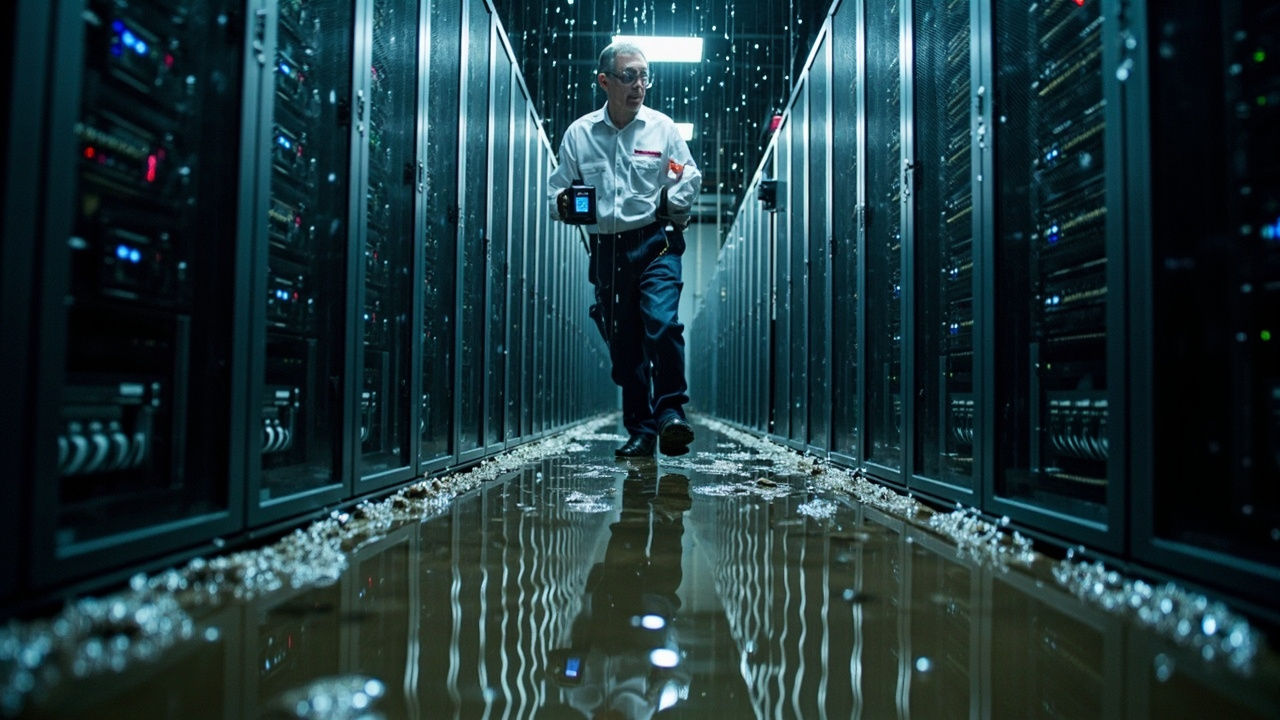
Atlas Water Damage Restoration Providence delivers immediate server room flood cleanup and data center water damage restoration across greater Boston, minimizing downtime and preventing hardware loss when every minute offline costs revenue.

Slider Image 1
Slider Image 2
Slider Image 3
Slider Image 4
Slider Image 5
Slider Image 7
Slider Image 8
Slider Image 9
Slider Image 10
Slider Image 11

Why Boston Server Rooms Face Critical Water Damage Risks

Server rooms in Boston face unique vulnerabilities tied to the region's infrastructure age and coastal climate. Buildings in the Financial District, Seaport, and Cambridge tech corridors were constructed decades before modern data center standards existed. Aging HVAC condensate lines, roof drainage systems prone to ice damming, and mechanical rooms positioned above IT spaces create persistent flood risks.

Boston's freeze-thaw cycles stress plumbing infrastructure. A burst supply line on a Saturday night can dump hundreds of gallons into a computer room before anyone notices. Coastal storm surge during nor'easters compounds the problem for ground-level facilities near Fort Point Channel or the harbor.

Water intrusion destroys servers, switches, and storage arrays within minutes. Moisture causes immediate short circuits. Corrosion begins within hours, compromising circuit boards even after equipment appears dry. The real damage often hides inside enclosures, attacking sensitive electronics while you assess visible water pooling.

Most businesses underestimate contamination risk. If the water source involves sewage backup or chemical exposure, every piece of hardware becomes a biohazard liability. Server room water extraction requires specialized protocols to prevent electrocution, data loss, and regulatory violations.

Delayed response compounds losses exponentially. Every hour of downtime multiplies lost transactions, productivity collapse, and client trust erosion. Boston's competitive business environment does not tolerate extended outages. IT room water mitigation must start immediately to salvage operations and protect your investment in technology infrastructure.

Why Boston Server Rooms Face Critical Water Damage Risks
Specialized IT Environment Water Extraction Protocols

Specialized IT Environment Water Extraction Protocols

Data center water damage restoration demands different methodology than standard commercial flood response. We do not treat server rooms like flooded office space. Our technicians understand the criticality of energized equipment, sensitive electronics, and zero-tolerance contamination standards.

First, we establish electrical safety. We coordinate with your facility manager to de-energize affected circuits or implement lockout-tagout procedures before water extraction begins. We never introduce conductive cleaning methods near live equipment. Our team uses non-conductive extraction tools and moisture meters calibrated for raised flooring and subfloor plenum spaces common in Boston commercial buildings.

We deploy trailer-mounted extraction units that pull thousands of gallons per hour without disrupting adjacent operations. Truck-mount systems stay outside, preventing vibration and diesel exhaust from entering clean IT environments. We use low-grain refrigerant dehumidifiers rather than desiccant systems that generate heat, which could trigger thermal shutdown in operating equipment.

Our computer room water extraction process addresses hidden moisture migration. Water travels through cable trays, conduit pathways, and underfloor voids. We use thermal imaging and moisture mapping to track contamination through your infrastructure, documenting every affected zone for insurance documentation and remediation verification.

Speed determines recovery success. We maintain pre-staged equipment throughout greater Boston to eliminate mobilization delays. Our technicians arrive with specialized server room water removal equipment, not generic carpet extractors. We understand that your business continuity depends on precision, not just water removal volume. Atlas Water Damage Restoration Providence treats IT infrastructure with the operational urgency it demands.

Your Server Room Recovery Timeline

Server Room Water Damage in Boston – Protecting Your Operations with 24-Hour IT Infrastructure Response
01

Immediate Assessment and Containment

Within 90 minutes of your call, our technicians arrive with thermal imaging cameras and moisture detection equipment. We photograph all affected areas, document water source and category, and establish containment barriers to prevent contamination spread. We create a prioritized extraction plan based on your critical systems, identifying which equipment remains operational and which requires immediate shutdown to prevent secondary damage.
02

Controlled Water Extraction

We deploy truck-mount extraction systems and industrial air movers positioned to accelerate evaporation without disturbing equipment or creating airborne particulate. Our team removes standing water from raised floors, extracts moisture from subfloor voids, and establishes negative air pressure to control humidity. We monitor temperature and relative humidity continuously, adjusting drying equipment to maintain optimal conditions for sensitive electronics while preventing condensation formation on cold surfaces.
03

Verification and Clearance Testing

Before we declare a space ready for equipment reactivation, we conduct comprehensive moisture verification testing using calibrated hygrometers and infrared thermography. We document that all materials have returned to acceptable moisture content levels, verify HVAC systems are functioning properly, and provide written clearance certification for your facilities team and insurance carrier. We coordinate with your IT staff on phased equipment restoration to minimize operational disruption.

Why Boston Businesses Trust Atlas for Critical IT Recovery

Server room water damage is not a learning opportunity. You need a provider who understands the stakes and has proven capability in high-consequence environments. Atlas Water Damage Restoration Providence has managed data center emergencies across Boston's most demanding commercial sectors, from biotech facilities in Kendall Square to financial services operations in the Financial District.

We understand Boston's commercial building stock. Many downtown towers were constructed in the 1960s and 1970s with mechanical systems that predate modern leak detection technology. We know which buildings have rooftop cooling towers prone to overflow, which structures have aging domestic water risers, and where HVAC condensate lines typically fail. This institutional knowledge accelerates our response and improves accuracy in damage assessment.

Our relationships with commercial property managers, insurance adjusters, and IT infrastructure vendors throughout greater Boston streamline the claims process. We provide documentation that satisfies carrier requirements and supports business interruption claims. We coordinate with your hardware vendors, ensuring our remediation protocols do not void manufacturer warranties or service agreements.

Commercial clients require accountability, not reassurance. We provide real-time project updates, maintain chain-of-custody documentation for affected equipment, and deliver detailed remediation reports that satisfy regulatory compliance requirements. When your operations depend on immediate recovery, you need a partner who understands business continuity, not just water extraction.

Boston businesses operate in a competitive environment where reputation damage from extended outages can eclipse direct water damage costs. Atlas treats every server room emergency with the urgency it demands, protecting both your infrastructure investment and your operational credibility in the market.

What Your Business Can Expect During Recovery

Rapid Response and Mobilization Speed

Our emergency response team operates 24 hours a day throughout greater Boston and surrounding communities. We guarantee on-site arrival within 90 minutes for server room emergencies in the core metro area. Our technicians carry specialized IT environment recovery equipment as standard loadout, eliminating the delay associated with equipment sourcing. We understand that every minute of server downtime represents lost revenue, productivity collapse, and client confidence erosion. You will speak directly with a project supervisor, not a call center operator. We deploy immediately, not after business hours end.

Detailed Infrastructure Assessment Process

Within the first hour on site, we complete a comprehensive damage assessment using thermal imaging, moisture mapping, and electrical safety verification. We document every affected system, photograph conditions for insurance carriers, and identify contamination risks that could compromise equipment or create liability exposure. You receive a written scope of work outlining our extraction methodology, estimated timeline, and equipment deployment plan. We coordinate directly with your IT staff and facilities manager to ensure our remediation activities align with your operational priorities and do not create additional business interruption.

Verified Dry-Down and Clearance Certification

We do not declare a space dry based on visual inspection. Our technicians use calibrated moisture meters and thermal imaging to verify that all building materials, subfloor structures, and concealed spaces have returned to acceptable moisture content levels. You receive written certification documenting moisture readings, environmental conditions, and clearance for equipment reactivation. This documentation satisfies insurance carrier requirements and provides liability protection if secondary damage occurs. We coordinate with your hardware vendors to ensure our remediation protocols meet manufacturer specifications and preserve warranty coverage on affected equipment.

Post-Recovery Risk Mitigation Planning

After completing water extraction and structural drying, we provide a detailed report identifying the failure point that caused the flooding event. We document vulnerable systems, recommend infrastructure upgrades, and outline preventive maintenance protocols to reduce future risk exposure. This report helps you make informed decisions about leak detection system installation, HVAC maintenance scheduling, and emergency response planning. We maintain documentation of our work for your facility records and insurance carrier files. If you experience another water intrusion event, we have baseline knowledge of your infrastructure that accelerates our response.

Frequently Asked Questions

You Have Questions,
We Have Answers

Can electronics recover from water damage? +

Recovery depends on water type and response time. Clean water allows higher recovery rates if power is immediately cut and equipment is professionally dried within 24 hours. Contaminated water or salt exposure causes corrosion and permanent damage. Most Boston server rooms face pipe burst scenarios with clean water, offering better odds. Hard drives rarely survive submersion. Circuit boards can be restored with ultrasonic cleaning and baking processes, but memory and processors often fail. Professional assessment determines what is salvageable. Do not power on wet electronics. Immediate shutdown and controlled drying maximize recovery potential. Consider all water-exposed components compromised for liability purposes.

What is the cost of water leak detection system for server room? +

Professional leak detection systems for server rooms in Boston range from basic sensors at a few hundred dollars to enterprise-grade systems with multiple zones and remote monitoring reaching several thousand. Installation labor adds to cost. Single-zone systems with audible alarms start lower, while multi-point sensor arrays with building management integration cost significantly more. Boston's humid summers and aging building infrastructure make detection critical. Factor in maintenance contracts and sensor replacement cycles. The investment scales with room size, criticality of operations, and integration requirements. Most systems pay for themselves by preventing one incident. Get site-specific quotes from three vendors for accurate budgeting.

How to write a water damage report? +

A proper water damage report documents incident timeline, affected equipment inventory, damage assessment, and remediation steps. Start with date, time, and discovery circumstances. Photograph all damage from multiple angles before moving anything. List every affected server, switch, cable, and component with serial numbers. Note water source, volume estimates, and contamination level. Document ambient conditions including temperature and humidity readings. Record all emergency actions taken and personnel involved. Include equipment value, replacement costs, and business interruption impact. Boston businesses need this documentation for insurance claims and potential litigation. Attach vendor quotes for repairs and professional assessment reports. Maintain objective, factual language throughout.

How to dehumidify a server room? +

Shut down all equipment immediately and establish negative air pressure to prevent moisture migration. Deploy commercial-grade dehumidifiers rated for the room's cubic footage, targeting 30-40 percent relative humidity. Position air movers to create circulation without directing airflow at sensitive electronics. Monitor conditions with calibrated hygrometers every four hours. Boston's humidity requires aggressive dehumidification, especially during summer months. Remove standing water first with extractors. Open raised flooring to dry the plenum space. Run dehumidifiers continuously for 72 hours minimum. Do not restart equipment until readings stabilize below 50 percent humidity for 24 hours. Professional restoration ensures proper drying without secondary damage.

How long does it take for water to dry out of electronics? +

Complete drying requires 48 to 72 hours in controlled conditions, but this timeline varies with water exposure severity and electronic complexity. Surface moisture evaporates quickly, but internal components trap water in micro-spaces. Circuit boards need 72 hours minimum in low-humidity environments. Hard drives require professional cleanroom disassembly. Batteries and capacitors hold moisture longer. Boston's seasonal humidity extends drying times. Powering on equipment prematurely causes shorts and permanent failure. Professional restoration uses desiccant chambers and controlled heat to accelerate safe drying. The clock starts when equipment reaches stable, monitored conditions, not when water exposure ends. Patience prevents converting recoverable damage into total loss.

Does rice actually fix wet electronics? +

No. Rice is ineffective and potentially harmful. Rice does not create adequate moisture-drawing capability for electronics and introduces starch dust that causes additional problems. This myth persists despite zero scientific support. Rice cannot reach internal component moisture and does not control humidity levels needed for safe drying. For Boston server rooms, rice creates contamination risk and wastes critical response time. Professional desiccant chambers, controlled airflow, and humidity management actually work. Rice might absorb surface moisture on a phone, but server equipment requires industrial drying methods. Relying on rice delays proper restoration and increases corrosion damage. Use professional water damage restoration services for business-critical equipment.

How much to charge for leak detection? +

Professional leak detection service pricing depends on site complexity, equipment used, and response urgency. Standard inspections typically cost between rates that vary based on facility size and system accessibility. Emergency calls command premium pricing. Boston commercial rates reflect higher operating costs and specialized equipment requirements. Thermal imaging, acoustic detection, and pressure testing each carry different price points. Multi-zone server rooms require more time and sensors than single-room assessments. Get itemized quotes including diagnostic methods, reporting, and follow-up verification. Pricing should cover technician expertise, equipment deployment, and detailed documentation. Compare scope of service, not just bottom-line cost. Cheap detection misses problems.

Will homeowners insurance cover a water main leak? +

Homeowners policies generally exclude water main leaks occurring outside the building foundation, but this question typically applies to commercial server room scenarios differently. Business policies vary significantly by carrier and endorsements. Most commercial policies cover sudden and accidental water damage from supply line failures inside the building. Gradual leaks from poor maintenance face denial. Boston's aging infrastructure increases claim frequency, making carriers restrictive. Review your specific policy's water damage exclusions and sub-limits. Server room losses often hit coverage caps quickly due to equipment values. Consider dedicated equipment breakdown coverage and business interruption riders. Document all maintenance records to support sudden failure claims.

Is water leak detection worth it? +

Absolutely worth it for server rooms. Detection systems cost a fraction of one water damage incident. Boston server downtime costs businesses thousands per hour in lost productivity, data recovery, and equipment replacement. Early detection limits damage scope and reduces restoration costs by 60 to 80 percent. Insurance carriers often provide premium discounts for monitored systems. The question is not whether to install detection, but which system matches your risk profile and budget. A single prevented incident pays for years of monitoring. Detection also demonstrates due diligence for liability purposes and regulatory compliance. For mission-critical operations, leak detection is mandatory risk management, not optional expense.

What qualifies as water damage? +

Water damage includes any moisture intrusion that affects building materials, equipment, or operations. This covers obvious flooding, hidden leaks, condensation, humidity damage, and sewage backups. In Boston server rooms, damage qualifies when water compromises equipment function, creates corrosion risk, or threatens business continuity. Visible water is obvious, but high humidity causing condensation also qualifies. Pipe sweating, HVAC drain failures, roof leaks, and plumbing failures all create compensable damage. Documentation requirements include moisture readings above 60 percent relative humidity, visible staining, equipment malfunction, or standing water. Insurance adjusters evaluate water source, contamination level, and damage progression when determining coverage.

How Boston's Aging Infrastructure Amplifies Server Room Flood Risks

Boston's commercial building inventory predates modern data center design standards by decades. Structures in the Financial District and Back Bay were constructed when mainframe computers occupied entire floors and water-cooled systems were standard practice. Today's high-density server deployments concentrate millions of dollars in equipment into spaces originally designed as office areas or storage rooms. Retrofitting these environments creates vulnerabilities. HVAC condensate lines routed through ceiling plenums, aging domestic water risers with corrosion-thinned walls, and roof drainage systems overwhelmed by Boston's increasingly intense precipitation events all create persistent flood risks that demand specialized IT room water mitigation protocols.

Atlas Water Damage Restoration Providence maintains deep familiarity with Boston's commercial building stock and the unique challenges posed by aging infrastructure in high-value IT environments. Our technicians understand the mechanical systems typical in older downtown towers, recognize the warning signs of imminent plumbing failure, and know how water migrates through the construction assemblies common in Boston commercial structures. This local expertise accelerates our damage assessment, improves remediation accuracy, and reduces the risk of overlooking hidden moisture that could compromise your recovery. When your business operations depend on immediate, effective server room water removal services, local knowledge translates directly into faster return to operations and reduced total loss.
Water Damage Restoration Services in The Boston Area

You can see our service area and our location on the map below. We are proud to serve the entire Boston area and surrounding communities. We're always ready to dispatch our team to your home or business, no matter where you are. We’re committed to a fast, reliable response and ensuring we’re always there when you need us most.

Address:
First Choice Water Damage Restoration Boston, 44 School St., Boston, MA, 02108

Additional Services We Offer

Our news updates

Latest Articles & News from The Blogs

Professional Water Damage Restoration for Retail Stores in Harvard Square Harvard Square retail stores face unique water damage risks from…

Professional Water Damage Restoration for Retail Stores in Harvard Square

Professional Water Damage Restoration for Retail Stores in Harvard Square Harvard Square retail stores face unique water damage risks from…

How to Dry Out a Damp Crawl Space in Your Belmont Home (And Stop the Smell)

How to Dry Out a Damp Crawl Space in Your Belmont Home (And Stop the Smell) Musty odors creeping up…

Emergency Dishwasher Leak Cleanup for Busy Kitchens in Arlington

Emergency Dishwasher Leak Cleanup for Busy Kitchens in Arlington Did you walk into your kitchen and find water pooling around…

Contact Us

Server room water damage demands immediate action. Every minute of delay increases equipment loss and extends downtime. Call Atlas Water Damage Restoration Providence now at (617) 789-8099 for 24-hour emergency response throughout greater Boston.