
Why a Battery Backup is the Only Way to Save Your Wakefield Basement During a Power Outage
When a severe storm hits Wakefield and the power goes out, your primary sump pump becomes useless. That moment is when a battery backup system becomes your basement’s only defense against flooding. Without it, you risk thousands of dollars in water damage from something as simple as a power outage during heavy rain. The most reliable flood restoration companies serving South Boston right now.
Wakefield’s location near Lake Quannapowitt and its low-lying areas make basements particularly vulnerable during storms. When the electricity fails, gravity takes over and water begins rising through your foundation. A properly installed battery backup sump pump activates automatically when the power fails, pumping water out at rates up to 2,200 gallons per hour to keep your basement dry.
The real danger isn’t just the initial flooding. Water damage creates perfect conditions for mold growth within 24-48 hours. What starts as a simple power outage can become a major restoration project costing thousands of dollars. The battery backup system costs far less than dealing with the aftermath of a flooded basement. Steps to Take After a Flood.
Modern battery backup systems use AGM (Absorbent Glass Mat) batteries that provide 6-10 hours of continuous pumping depending on the model. Some advanced systems include dual batteries for extended protection or smart monitoring that sends alerts to your phone when the backup activates. These systems integrate seamlessly with your existing sump pump setup.
The installation process typically takes 2-4 hours for a professional. The technician mounts the backup pump in the same sump pit, connects it to a dedicated battery housed in a sealed compartment, and tests the entire system. Most installations include a check valve to prevent backflow and ensure maximum efficiency during operation. Professional sump pump failure cleanup for Newton homeowners.
Understanding Wakefield’s Unique Flooding Risks
Wakefield’s geography creates specific challenges for basement protection. The town sits in a bowl-like depression with Lake Quannapowitt at its center, surrounded by hills that channel water toward lower areas. During heavy storms, this natural water flow can overwhelm municipal drainage systems and push water into basements through foundation cracks.
The area around Greenwood and Montrose neighborhoods experiences particularly high water table levels. Homes in these zones often need deeper sump pits and more powerful pumping systems. The clay-rich soil common in Middlesex County also retains water, creating hydrostatic pressure against foundation walls that can force water through even tiny openings.
Wakefield’s aging housing stock adds another layer of complexity. Many homes built before 1980 have foundation cracks and outdated waterproofing that newer construction doesn’t face. These older basements are especially vulnerable during power outages when the primary pump can’t handle the increased water pressure. How to handle a sudden sewage backup in your Somerville home.
Local building codes require specific sump pump installations in new construction, but many existing homes don’t meet these standards. The Massachusetts State Building Code (780 CMR) mandates proper drainage systems, but enforcement varies for older properties. This creates a patchwork of protection levels across Wakefield neighborhoods.
Winter storms compound the problem. When heavy snow melts combined with spring rains, the water volume can exceed what municipal systems can handle. Add a power outage to this scenario and you have a perfect storm for basement flooding. The battery backup becomes not just convenient but essential.
How Battery Backup Systems Actually Work
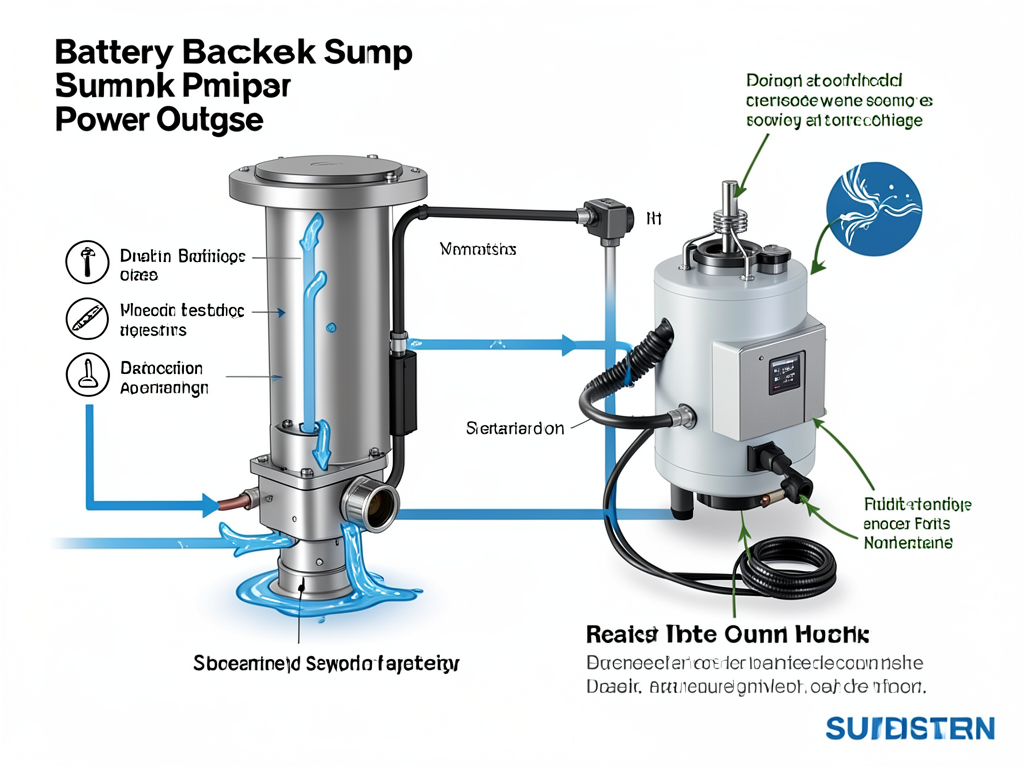
A battery backup sump pump system consists of three main components: the backup pump itself, a dedicated deep-cycle battery, and a monitoring/controller unit. When the power fails, the controller detects the loss of voltage and automatically switches to battery power, activating the backup pump.
The backup pump sits in the same sump pit as your primary pump but at a slightly higher level. This positioning ensures it only activates when water rises above the primary pump’s capacity or when the power fails. Most systems can pump between 1,500 and 2,200 gallons per hour, which matches or exceeds many primary pumps.
AGM batteries are the standard choice because they’re sealed, maintenance-free, and perform well in the temperature ranges found in basements. A typical 75Ah AGM battery provides 6-8 hours of continuous pumping. For extended outages, some homeowners install dual battery systems or connect to a small generator.
The monitoring system does more than just detect power loss. It tracks battery charge levels, pump run times, and can alert you via smartphone app when the backup activates. Some advanced models include diagnostic features that warn you of potential issues before they become problems.
Installation requires proper battery ventilation even with sealed AGM units. The battery compartment must allow for gas release while protecting the battery from moisture and debris. Professional installers follow specific guidelines for battery placement, wiring, and system testing to ensure reliable operation.

Diagram showing the complete battery backup sump pump installation including primary pump, backup pump, battery compartment, check valve, and controller unit.
Battery Backup vs. Water-Powered Backup: Making the Right Choice
Water-powered backup systems use municipal water pressure to create suction that removes water from your sump pit. While these systems don’t require batteries or electricity, they have significant limitations that make them unsuitable for many Wakefield homes.
Water-powered systems typically pump 1 gallon of water out for every 1-2 gallons they consume. During extended outages, this water usage becomes expensive and wasteful. More importantly, if your water main also loses pressure during a major storm, the backup becomes useless just when you need it most.
Battery backup systems provide consistent performance regardless of municipal water pressure. They pump water at predictable rates and don’t create additional utility costs during operation. The main limitation is battery life, which is why proper battery sizing and maintenance matter.
Here’s a comparison of the two systems:
| Feature | Battery Backup | Water-Powered Backup |
|---|---|---|
| Operating Cost | None during use | Water usage charges |
| Power Requirement | Battery only | Minimum 20 PSI water pressure |
| Pumping Capacity | 1,500-2,200 GPH | 750-1,500 GPH |
| Battery Life | 6-10 hours typical | Unlimited (if water pressure holds) |
| Installation Complexity | Moderate | Simple |
| Maintenance | Battery replacement every 3-5 years | Minimal |
Battery systems also offer smart features that water-powered units lack. Remote monitoring, battery health tracking, and automatic testing cycles help ensure your system works when you need it. These features provide peace of mind that’s worth the additional upfront cost.
The initial investment for a quality battery backup system ranges from $800 to $1,500 installed, depending on pump capacity and battery configuration. This cost is minimal compared to potential water damage repairs that can exceed $10,000 for a finished basement. EPA WaterSense sump pump information.
Our Installation Process: Step-by-Step
Professional installation ensures your battery backup system will work reliably when you need it most. The process begins with a thorough assessment of your current sump pump setup and basement conditions.
First, we evaluate your primary pump’s capacity and the typical water volume your basement handles during storms. This assessment helps determine the appropriate backup pump size. Homes in high-risk areas near Lake Quannapowitt might need higher-capacity systems than those on higher ground.
Next, we examine your sump pit dimensions and existing plumbing. The backup pump must fit alongside your primary pump while maintaining proper clearances. We also check for adequate drainage and verify that your discharge line meets local code requirements.
The battery compartment installation is critical for long-term reliability. We mount a sealed, ventilated box in a dry location near the sump pit. This location must protect the battery from moisture while allowing for proper air circulation and easy access for maintenance.
Wiring the system requires careful attention to electrical codes and safety standards. We install a dedicated circuit with proper grounding and surge protection. The controller unit connects to both the primary pump power supply and the battery, allowing automatic switching during outages.
Testing completes the installation. We simulate power loss, verify pump activation, check battery voltage, and confirm proper discharge. We also demonstrate the system’s alarm features and provide maintenance guidelines to ensure long-term reliability.
The entire process typically takes 3-4 hours for a standard installation. More complex setups involving dual batteries or integration with whole-house generators may require additional time.
Technician installing a battery backup sump pump system, showing proper battery compartment mounting and wiring connections.
Real Protection for Wakefield Homes: A Local Success Story
Last winter, a homeowner near the Greenwood neighborhood experienced what could have been a devastating flood. A severe nor’easter knocked out power to the entire area while dumping heavy rain on already saturated ground. The primary sump pump stopped working immediately. Getting immediate help for a burst pipe in your Back Bay brownstone.
Thanks to their recently installed battery backup system, water never reached the basement floor. The backup pump activated within seconds of the power loss and continued pumping for over 8 hours until utility crews restored electricity. The system’s monitoring app alerted the homeowner via smartphone, allowing them to monitor conditions remotely.
Without the battery backup, this home would have suffered significant damage. The basement contained a finished recreation room, home office, and mechanical systems. Water damage to these areas alone would have cost thousands in repairs and replacement.
This case illustrates why battery backup systems are particularly valuable in Wakefield’s flood-prone areas. The combination of aging infrastructure, clay soil, and proximity to water bodies creates conditions where power outages during storms almost guarantee basement flooding without proper protection.
The investment in battery backup protection paid for itself in a single storm. Beyond the immediate financial savings, the homeowner avoided the stress and disruption of dealing with water damage, mold remediation, and insurance claims.
Maintaining Your Battery Backup System
Regular maintenance ensures your battery backup system will work when you need it most. Unlike your primary pump that runs frequently, the backup system sits idle most of the time, making periodic testing essential.
Test your system every three months by unplugging the primary pump and pouring water into the sump pit until the backup activates. This simple test verifies that all components work properly and gives you confidence in the system’s reliability.
Battery maintenance is crucial for system performance. AGM batteries typically last 3-5 years, but their capacity degrades over time. Most monitoring systems include battery health indicators, but annual testing with a multimeter provides the most accurate assessment of remaining capacity.
Clean the sump pit annually to remove sediment and debris that can interfere with pump operation. Check the check valve for proper sealing and inspect discharge pipes for blockages or damage. These simple steps prevent common failures that could leave you vulnerable during a storm.
Replace batteries proactively rather than waiting for failure. A battery that tests at 70% capacity might seem adequate, but during an extended outage, that reduced capacity could mean the difference between a dry basement and significant flooding.
Consider professional maintenance service annually. A technician can perform comprehensive testing, verify all electrical connections, and identify potential issues before they cause system failure. This service typically costs $100-150 but provides invaluable peace of mind.
Winter requires special attention. Cold temperatures can affect battery performance and increase the risk of discharge line freezing. Ensure your discharge pipe has proper slope and consider installing a freeze-resistant line in areas prone to extreme cold.
Frequently Asked Questions about Sump Pump Battery Backup in Wakefield
How long will a battery backup run during a power outage?
A typical 75Ah AGM battery provides 6-8 hours of continuous pumping. Actual runtime depends on how often the pump cycles and the battery’s age. Newer batteries with dual configurations can run 12-15 hours or more.
Can I install a battery backup system myself?
While DIY installation is possible, professional installation ensures proper wiring, code compliance, and system integration. The cost of professional installation is minimal compared to potential water damage from system failure.
What happens if the battery dies during a long outage?
Most systems include low battery alarms that alert you before complete failure. For extended outages, consider a small portable generator to recharge the battery or install a dual battery system for extended runtime.
Will a battery backup work with my existing sump pump?
Yes, battery backup systems are designed to work alongside your existing primary pump. The backup activates automatically when the primary fails due to power loss or pump failure.
How much does battery replacement cost?
Replacement AGM batteries typically cost $150-250 depending on capacity. Professional replacement including testing and disposal of the old battery runs $250-350 total.
Don’t Wait Until It’s Too Late
The next severe storm is coming, and when it does, will your Wakefield basement be protected? A battery backup sump pump system provides the only reliable defense against flooding when the power fails. The cost of installation is minimal compared to the potential damage from even a single flooding event.
Wakefield’s unique geography and weather patterns make basement flooding a real threat for many homeowners. The combination of aging infrastructure, clay soil, and proximity to water bodies creates conditions where power outages during storms almost guarantee flooding without proper protection.
Professional installation ensures your system meets local building codes and integrates properly with your existing setup. Our technicians understand Wakefield’s specific challenges and can recommend the right system for your home’s needs and your budget.
Call (617) 789-8099 today to schedule your battery backup sump pump installation. Don’t let the next storm catch you unprepared. Protect your home, your belongings, and your peace of mind with a professionally installed battery backup system.
The cost of waiting could be thousands of dollars in water damage, weeks of disruption, and the stress of dealing with insurance claims and repairs. Take action now before the next storm hits Wakefield.
Pick up the phone and call (617) 789-8099 before the next storm hits. Your basement’s protection can’t wait until after the flooding starts. For more information, visit FEMA flood protection guidelines.
{
“@context”: “https://schema.org”,
“@type”: “BlogPosting”,
“headline”: “Why a Battery Backup is the Only Way to Save Your Wakefield Basement During a Power Outage”,
“description”: “Protect your Wakefield basement from flooding during power outages with a battery backup sump pump. Learn why this is essential for local homes and how to stay safe.”,
“wordCount”: 2315,
“datePublished”: “2026-05-26T14:37:00.000Z”,
“dateModified”: “2026-05-26T14:37:00.000Z”,
“inLanguage”: “en-US”,
“mainEntityOfPage”: {
“@type”: “WebPage”,
“@id”: “https://firstchoicewaterdamagerestorationboston.com”
},
“publisher”: {
“@type”: “LocalBusiness”,
“name”: “First Choice Water Damage Restoration Boston”,
“url”: “https://firstchoicewaterdamagerestorationboston.com”
},
“author”: {
“@type”: “Organization”,
“name”: “First Choice Water Damage Restoration Boston”,
“url”: “https://firstchoicewaterdamagerestorationboston.com”
},
“image”: {
“@type”: “ImageObject”,
“url”: “https://firstchoicewaterdamagerestorationboston.com/wp-content/uploads/2026/03/why-a-battery-backup-is-the-only-way-to-save-your-1.png”
}
}
{
“@context”: “https://schema.org”,
“@type”: “LocalBusiness”,
“name”: “First Choice Water Damage Restoration Boston”,
“url”: “https://firstchoicewaterdamagerestorationboston.com”,
“address”: {
“@type”: “PostalAddress”,
“addressLocality”: “Boston”
},
“areaServed”: {
“@type”: “City”,
“name”: “Boston”
}
}
{
“@context”: “https://schema.org”,
“@type”: “FAQPage”,
“mainEntity”: [
{
“@type”: “Question”,
“name”: “How long will a battery backup run during a power outage?”,
“acceptedAnswer”: {
“@type”: “Answer”,
“text”: “A typical 75Ah AGM battery provides 6-8 hours of continuous pumping. Actual runtime depends on how often the pump cycles and the battery’s age. Newer batteries with dual configurations can run 12-15 hours or more.”
}
},
{
“@type”: “Question”,
“name”: “Can I install a battery backup system myself?”,
“acceptedAnswer”: {
“@type”: “Answer”,
“text”: “While DIY installation is possible, professional installation ensures proper wiring, code compliance, and system integration. The cost of professional installation is minimal compared to potential water damage from system failure.”
}
},
{
“@type”: “Question”,
“name”: “What happens if the battery dies during a long outage?”,
“acceptedAnswer”: {
“@type”: “Answer”,
“text”: “Most systems include low battery alarms that alert you before complete failure. For extended outages, consider a small portable generator to recharge the battery or install a dual battery system for extended runtime.”
}
},
{
“@type”: “Question”,
“name”: “Will a battery backup work with my existing sump pump?”,
“acceptedAnswer”: {
“@type”: “Answer”,
“text”: “Yes, battery backup systems are designed to work alongside your existing primary pump. The backup activates automatically when the primary fails due to power loss or pump failure.”
}
},
{
“@type”: “Question”,
“name”: “How much does battery replacement cost?”,
“acceptedAnswer”: {
“@type”: “Answer”,
“text”: “Replacement AGM batteries typically cost $150-250 depending on capacity. Professional replacement including testing and disposal of the old battery runs $250-350 total.”
}
}
]
}
{
“@context”: “https://schema.org”,
“@type”: “BreadcrumbList”,
“itemListElement”: [
{
“@type”: “ListItem”,
“position”: 1,
“name”: “Home”,
“item”: “https://firstchoicewaterdamagerestorationboston.com”
},
{
“@type”: “ListItem”,
“position”: 2,
“name”: “Blog”,
“item”: “https://firstchoicewaterdamagerestorationboston.com/blog”
},
{
“@type”: “ListItem”,
“position”: 3,
“name”: “Why a Battery Backup is the Only Way to Save Your Wakefield Basement During a Power Outage”
}
]
}
{
“@context”: “https://schema.org”,
“@type”: “Service”,
“serviceType”: “Water Damage Restoration”,
“provider”: {
“@type”: “LocalBusiness”,
“name”: “First Choice Water Damage Restoration Boston”,
“url”: “https://firstchoicewaterdamagerestorationboston.com”
},
“areaServed”: {
“@type”: “City”,
“name”: “Boston”
},
“description”: “Protect your Wakefield basement from flooding during power outages with a battery backup sump pump. Learn why this is essential for local homes and how to stay safe.”
}