
The best way to clean up after a water heater explosion in Quincy
A water heater explosion in Quincy can release 40 to 80 gallons of scalding water in seconds, flooding basements and destroying drywall before you even realize what happened. The immediate priority is stopping the water flow and beginning extraction within the first 24 hours to prevent mold growth, which can begin colonizing damp surfaces in as little as 48 hours in Quincy’s humid coastal climate. Getting immediate help for a burst pipe in your Back Bay brownstone.
Emergency shut-off steps for a water heater failure
When you discover a leaking or exploded water heater, every minute counts. The Quincy water table sits just 3 to 5 feet below grade in many neighborhoods, meaning water spreads rapidly through basement foundations and into wall cavities. Follow these steps immediately while calling for professional help: Professional sump pump failure cleanup for Newton homeowners.
- Turn off power
Flip the circuit breaker for the water heater. For gas units, turn the gas valve to “off” position. This prevents electrical hazards and stops heating elements from burning out.
- Shut off water supply
Locate the cold water inlet valve above the tank and turn it clockwise. If the valve is stuck or you cannot find it, shut off the main water valve at your water meter near the street.
- Begin water extraction
Use wet-dry vacuums, mops, and towels to remove standing water. Focus on getting water off concrete floors within the first hour to prevent it from seeping into foundation cracks common in Quincy’s older homes.
- Document damage
Take photos of the exploded tank, water spread, and affected areas before cleanup begins. This documentation is essential for insurance claims under Massachusetts homeowner policies. Massachusetts State Building Code.
Why Quincy homes face unique water heater risks
Quincy’s coastal location and aging housing stock create specific vulnerabilities for water heater failures. The city sits in Norfolk County where many homes were built between 1940 and 1970, and original plumbing systems often include galvanized steel pipes that corrode from the inside out. This corrosion accelerates anode rod depletion in water heaters, causing tanks to fail prematurely.
The Massachusetts State Building Code (780 CMR) requires pressure relief valves on all water heaters, but many Quincy homes still have units installed before these requirements took effect. A failed pressure relief valve combined with a deteriorating tank can lead to catastrophic explosions. Additionally, Quincy’s high humidity levels, averaging 75% year-round, create perfect conditions for mold growth on damp surfaces within 48 to 72 hours after water exposure. Steps to Take After a Flood.
Quincy’s soil composition also plays a role. The area features a mix of sandy loam and clay soils that can shift during seasonal freeze-thaw cycles. This movement puts stress on water heater connections and can cause leaks that go unnoticed until major failure occurs. Homes near Wollaston Beach and Squantum experience higher groundwater levels, increasing the risk of foundation water intrusion when a heater fails.
Professional water extraction and drying process
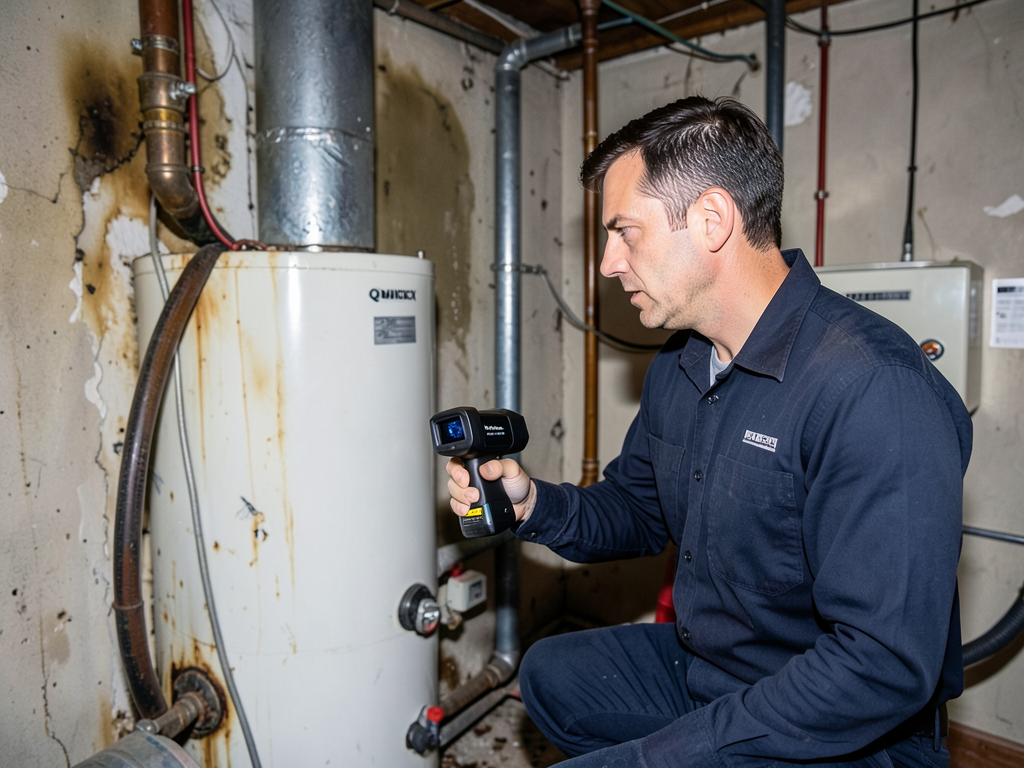
Professional water damage restoration follows IICRC S500 standards for water mitigation. The process begins with moisture mapping using thermal imaging cameras to detect water behind walls and under flooring. In Quincy homes, we often find water has traveled through balloon framing common in pre-1950 construction, spreading damage far beyond the initial leak site.
Industrial-grade extraction equipment removes standing water at rates of up to 20 gallons per minute. For Quincy basements with concrete floors, we use weighted extraction tools that compress carpet and padding to remove water trapped in fibers. The extraction phase typically takes 2 to 4 hours depending on the volume of water and accessibility. Managing industrial water damage and flood cleanup in Chelsea.
Drying involves strategic placement of commercial dehumidifiers and air movers. A standard Quincy basement requires 4 to 6 dehumidifiers running continuously for 3 to 5 days to achieve proper moisture content levels. We monitor progress using moisture meters that measure wood moisture content, which should be below 16% to prevent mold growth and structural damage.
Antimicrobial treatment is critical in Quincy’s climate. We apply EPA-registered antimicrobials to all affected surfaces, including areas that appear dry but may harbor moisture in wall cavities. This treatment prevents mold colonies from establishing during the critical 48 to 72 hour window after water exposure. EPA mold guidelines.
Structural assessment and repair considerations
Water heater explosions often cause more damage than homeowners realize. The force of an exploding tank can crack floor tiles, damage drywall, and even compromise load-bearing walls. In Quincy’s older homes, water can wick up plaster walls several feet above the water line, requiring extensive demolition and reconstruction.
Electrical systems require immediate inspection. Water and electricity create deadly hazards, and Quincy building codes require licensed electricians to evaluate any water-exposed outlets, switches, or wiring. The Massachusetts Electrical Code, based on the NEC, mandates replacement of any electrical components that have been submerged or even splashed by contaminated water.
Insurance coordination is a major component of professional restoration. Most Quincy homeowners’ policies cover sudden water heater failures, but not gradual leaks or maintenance-related issues. We work directly with insurance adjusters, providing detailed documentation of damage extent, restoration procedures, and compliance with local building codes. How to handle a sudden sewage backup in your Somerville home.
Preventing future water heater failures
Regular maintenance can extend water heater life from the typical 8 to 12 years to 15 years or more. Quincy residents should schedule annual inspections that include checking the pressure relief valve, testing the anode rod, and flushing sediment from the tank. Sediment buildup is particularly problematic in Quincy due to the area’s hard water, which contains high mineral content that accumulates at the bottom of tanks.
Installing a water alarm near the water heater provides early warning of leaks. These devices cost under $50 but can prevent thousands in damage by alerting homeowners to small leaks before they become catastrophic failures. For Quincy basements, consider a smart water shut-off valve that automatically cuts water supply when leaks are detected.
Upgrading to a tankless water heater eliminates the risk of tank explosions entirely. While the initial investment is higher, tankless units provide continuous hot water and typically last 20 years or more. They also take up less space in Quincy’s often cramped basements and utility closets.
Cost factors for water heater cleanup in Quincy
Water damage restoration costs in Quincy typically range from $3 to $8 per square foot for clean water extraction and drying. Category 2 water from a leaking heater with some sediment contamination costs $4 to $10 per square foot. Black water situations involving sewage backup or contaminated groundwater can exceed $10 per square foot due to the need for specialized cleaning and disposal procedures.
Factors affecting cost include the extent of water spread, materials affected, and accessibility. Quincy homes with finished basements require more extensive restoration than unfinished spaces. Hardwood floors, custom cabinetry, and high-end finishes significantly increase restoration costs compared to basic materials.
Insurance deductibles in Massachusetts typically range from $500 to $2,000. Many Quincy homeowners find that professional restoration companies can often bill insurance directly, reducing out-of-pocket expenses to just the deductible amount. Some companies also offer deductible assistance programs for qualifying customers.
Frequently Asked Questions
How long does water heater cleanup take?
Initial water extraction takes 2 to 4 hours. Complete drying typically requires 3 to 5 days with commercial equipment running continuously. Total restoration, including repairs, can take 1 to 3 weeks depending on the extent of damage and availability of materials.
Can I clean up a water heater leak myself?
Small leaks under 10 gallons can be handled with shop vacuums and fans, but larger volumes require professional equipment. DIY cleanup often misses hidden moisture in walls and under floors, leading to mold growth within days. Professional restoration ensures complete drying and prevents secondary damage.
Does homeowners insurance cover water heater explosions?
Most Massachusetts homeowners policies cover sudden and accidental water heater failures. However, damage from gradual leaks or lack of maintenance is typically excluded. Check your policy for specific coverage details and whether you have replacement cost or actual cash value coverage for the water heater itself.
What are signs my water heater might explode?
Warning signs include rumbling noises from sediment buildup, rusty water from corrosion, leaking pressure relief valves, and inconsistent water temperature. If you notice any of these symptoms, especially in a unit over 10 years old, have it inspected immediately to prevent catastrophic failure.
Call for immediate water heater cleanup in Quincy
Water heater explosions don’t wait for business hours, and neither should you. Our emergency response team arrives within 60 minutes anywhere in Quincy, equipped with industrial extraction equipment and moisture detection technology. We understand the urgency of preventing mold growth in Quincy’s humid climate and the importance of protecting your home’s structural integrity.
Don’t risk DIY cleanup that leaves hidden moisture behind. Call (617) 789-8099 now for immediate water heater explosion cleanup in Quincy. Our certified technicians will stop the water, extract all moisture, and begin the drying process within the critical first 24 hours to protect your home and belongings.
Pick up the phone and call (617) 789-8099 before the next storm hits or the next pipe bursts. Quick action today prevents thousands in additional damage tomorrow. We’re ready to help Quincy homeowners recover from water heater emergencies 24 hours a day, 7 days a week.
{
“@context”: “https://schema.org”,
“@type”: “BlogPosting”,
“headline”: “The best way to clean up after a water heater explosion in Quincy”,
“description”: “Water heater explosions in Quincy require immediate cleanup to prevent mold and structural damage. Learn the emergency steps and why professional restoration is critical.”,
“wordCount”: 1577,
“datePublished”: “2026-02-25T07:48:00.000Z”,
“dateModified”: “2026-02-25T07:48:00.000Z”,
“inLanguage”: “en-US”,
“mainEntityOfPage”: {
“@type”: “WebPage”,
“@id”: “https://firstchoicewaterdamagerestorationboston.com”
},
“publisher”: {
“@type”: “LocalBusiness”,
“name”: “First Choice Water Damage Restoration Boston”,
“url”: “https://firstchoicewaterdamagerestorationboston.com”
},
“author”: {
“@type”: “Organization”,
“name”: “First Choice Water Damage Restoration Boston”,
“url”: “https://firstchoicewaterdamagerestorationboston.com”
},
“image”: {
“@type”: “ImageObject”,
“url”: “https://firstchoicewaterdamagerestorationboston.com/wp-content/uploads/2026/03/the-best-way-to-clean-up-after-a-water-heater-expl-1.png”
}
}
{
“@context”: “https://schema.org”,
“@type”: “LocalBusiness”,
“name”: “First Choice Water Damage Restoration Boston”,
“url”: “https://firstchoicewaterdamagerestorationboston.com”,
“address”: {
“@type”: “PostalAddress”,
“addressLocality”: “Boston”
},
“areaServed”: {
“@type”: “City”,
“name”: “Boston”
}
}
{
“@context”: “https://schema.org”,
“@type”: “FAQPage”,
“mainEntity”: [
{
“@type”: “Question”,
“name”: “How long does water heater cleanup take?”,
“acceptedAnswer”: {
“@type”: “Answer”,
“text”: “Initial water extraction takes 2 to 4 hours. Complete drying typically requires 3 to 5 days with commercial equipment running continuously. Total restoration, including repairs, can take 1 to 3 weeks depending on the extent of damage and availability of materials.”
}
},
{
“@type”: “Question”,
“name”: “Can I clean up a water heater leak myself?”,
“acceptedAnswer”: {
“@type”: “Answer”,
“text”: “Small leaks under 10 gallons can be handled with shop vacuums and fans, but larger volumes require professional equipment. DIY cleanup often misses hidden moisture in walls and under floors, leading to mold growth within days. Professional restoration ensures complete drying and prevents secondary damage.”
}
},
{
“@type”: “Question”,
“name”: “Does homeowners insurance cover water heater explosions?”,
“acceptedAnswer”: {
“@type”: “Answer”,
“text”: “Most Massachusetts homeowners policies cover sudden and accidental water heater failures. However, damage from gradual leaks or lack of maintenance is typically excluded. Check your policy for specific coverage details and whether you have replacement cost or actual cash value coverage for the water heater itself.”
}
},
{
“@type”: “Question”,
“name”: “What are signs my water heater might explode?”,
“acceptedAnswer”: {
“@type”: “Answer”,
“text”: “Warning signs include rumbling noises from sediment buildup, rusty water from corrosion, leaking pressure relief valves, and inconsistent water temperature. If you notice any of these symptoms, especially in a unit over 10 years old, have it inspected immediately to prevent catastrophic failure.”
}
}
]
}
{
“@context”: “https://schema.org”,
“@type”: “HowTo”,
“name”: “Emergency Water Heater Shut-Off”,
“step”: [
{
“@type”: “HowToStep”,
“position”: 1,
“name”: “Turn off power”,
“text”: “Flip the circuit breaker for the water heater. For gas units, turn the gas valve to \”off\” position. This prevents electrical hazards and stops heating elements from burning out.”
},
{
“@type”: “HowToStep”,
“position”: 2,
“name”: “Shut off water supply”,
“text”: “Locate the cold water inlet valve above the tank and turn it clockwise. If the valve is stuck or you cannot find it, shut off the main water valve at your water meter near the street.”
},
{
“@type”: “HowToStep”,
“position”: 3,
“name”: “Begin water extraction”,
“text”: “Use wet-dry vacuums, mops, and towels to remove standing water. Focus on getting water off concrete floors within the first hour to prevent it from seeping into foundation cracks common in Quincy’s older homes.”
},
{
“@type”: “HowToStep”,
“position”: 4,
“name”: “Document damage”,
“text”: “Take photos of the exploded tank, water spread, and affected areas before cleanup begins. This documentation is essential for insurance claims under Massachusetts homeowner policies. Massachusetts State Building Code.”
}
],
“image”: “https://firstchoicewaterdamagerestorationboston.com/wp-content/uploads/2026/03/the-best-way-to-clean-up-after-a-water-heater-expl-1.png”
}
{
“@context”: “https://schema.org”,
“@type”: “BreadcrumbList”,
“itemListElement”: [
{
“@type”: “ListItem”,
“position”: 1,
“name”: “Home”,
“item”: “https://firstchoicewaterdamagerestorationboston.com”
},
{
“@type”: “ListItem”,
“position”: 2,
“name”: “Blog”,
“item”: “https://firstchoicewaterdamagerestorationboston.com/blog”
},
{
“@type”: “ListItem”,
“position”: 3,
“name”: “The best way to clean up after a water heater explosion in Quincy”
}
]
}
{
“@context”: “https://schema.org”,
“@type”: “Service”,
“serviceType”: “Water Damage Restoration”,
“provider”: {
“@type”: “LocalBusiness”,
“name”: “First Choice Water Damage Restoration Boston”,
“url”: “https://firstchoicewaterdamagerestorationboston.com”
},
“areaServed”: {
“@type”: “City”,
“name”: “Boston”
},
“description”: “Water heater explosions in Quincy require immediate cleanup to prevent mold and structural damage. Learn the emergency steps and why professional restoration is critical.”
}